Washington has a habit of picking a look and sticking with it. A Cascade logging town remade its downtown as Bavaria. A Methow Valley stop rebuilt false fronts before the North Cascades Highway opened. Kitsap keeps a Norwegian waterfront, Whatcom County leans Dutch on Front Street, and a former coal camp still draws fans of a 1990s TV show. Add a preserved New England company town and a Skagit Valley stop literally named for cement, and you've got a statewide circuit of places that look like nowhere else nearby.
These seven towns are publicly walkable. We stuck to places you can visit legally from sidewalks, parks, museums and open shops. Confirm hours the morning you go; small-town schedules shift with the season.
Leavenworth: Bavarian village in the Cascades
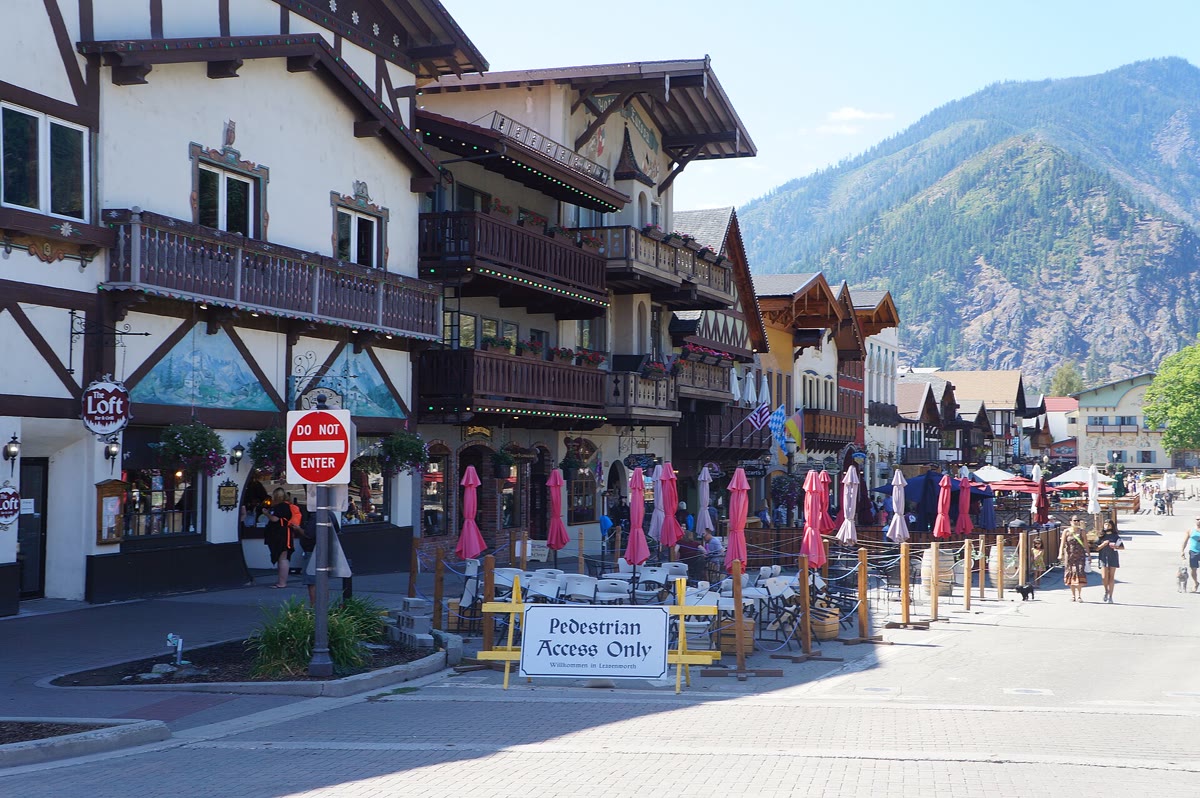
Leavenworth sits on U.S. Highway 2 in the Wenatchee River valley, roughly two hours east of Seattle when Stevens Pass cooperates. In the early 1960s the railroad and timber base had faded and the town was running out of options. Local leaders worked through a University of Washington small-town program known as Project L.I.F.E. and chose tourism built around an Alpine-Bavarian downtown that matched the surrounding hills.
The first remodeled building, the fire-damaged Chikamin Hotel, reopened as the Edelweiss Hotel on July 1, 1965. Private money paid for the facades. Design rules still require commercial buildings downtown to keep the Bavarian look, which is why Front Street still reads as one continuous village rather than a strip of mismatched storefronts. Festivals that started in that era — Autumn Leaf Festival, Maifest and the Christmas Lighting Festival — still shape the calendar. Oktoberfest came later.
Start at the Willkommen Center at 645 Front Street for maps, trail notes and mountain-pass updates. Call (509) 548-5807 if you need conditions before you leave. Front Street is the main stroll: shops, restaurants and riverfront parkland within a few blocks. Holiday weekends pack the sidewalks; midweek visits leave more room to look up at the timberwork.
Visitor planning: leavenworth.org
Winthrop: Old West on the Methow
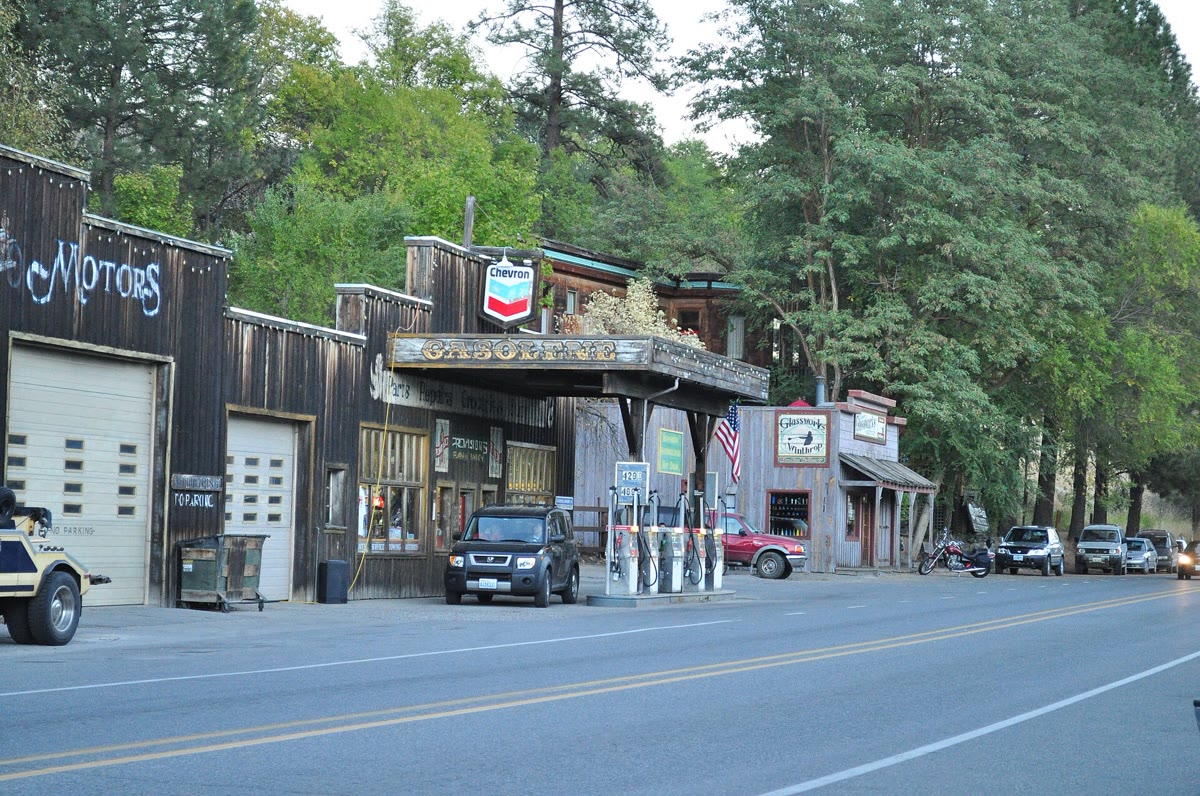
Winthrop sits in the Methow Valley near the eastern approach to the North Cascades Highway (State Route 20). Ahead of that highway's September 1972 opening, mill owners Otto and Kathryn Wagner helped fund a commercial rebuild in late-nineteenth-century Western style. Designer Robert Jorgensen, who had already worked on Leavenworth's theme, shaped the early look. False fronts and wooden boardwalks went up on the business blocks. A Westernization ordinance still governs exterior changes, so the theme isn't a one-time coat of paint.
Walk Riverside Avenue and the short side streets. Galleries, outfitters and cafes sit behind period fronts that photograph best in morning or late light. When SR 20 is open over the passes, Winthrop is a natural overnight between the Cascades and the Methow Trail system. In winter the high highway closes, so check WSDOT before you draw a loop that depends on it.
Town information: townofwinthrop.com
Poulsbo: Little Norway on Liberty Bay
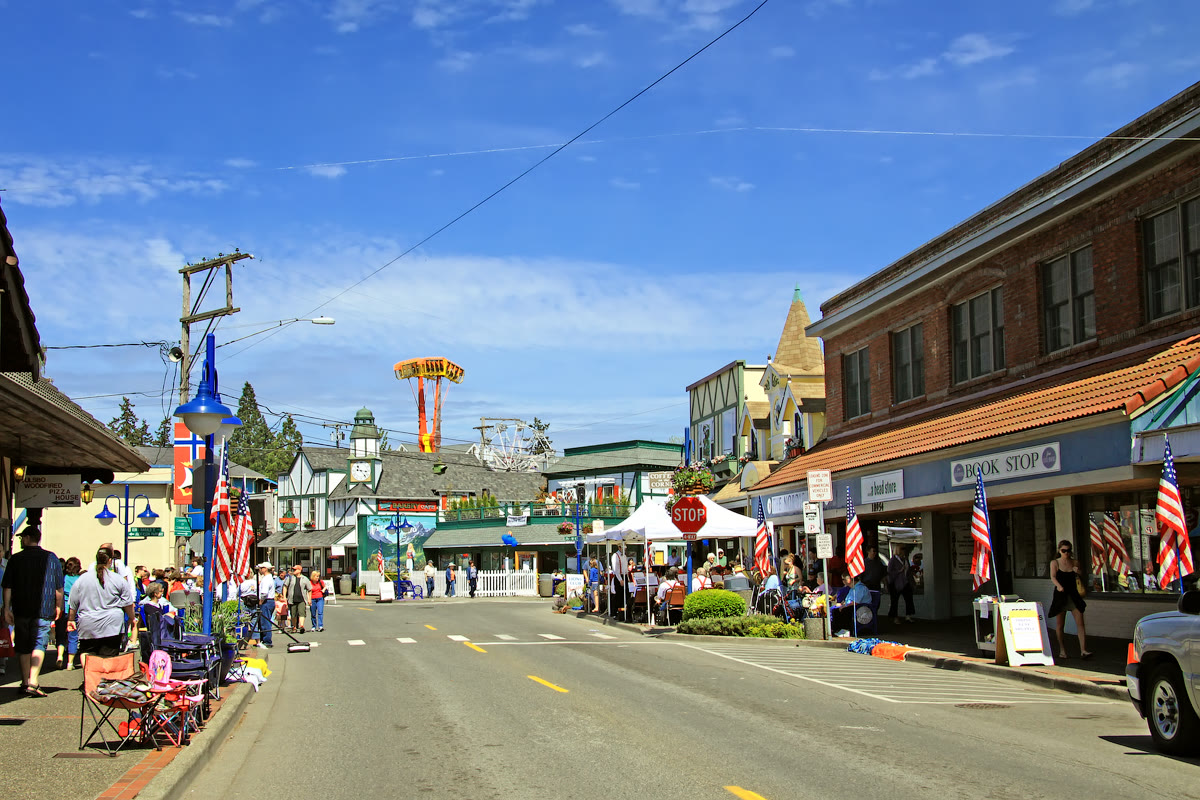
Poulsbo, on the Kitsap Peninsula, earned the nickname "Little Norway" from Norwegian families who settled the Liberty Bay shoreline in the 1880s. The water and the Olympic Mountains behind it reminded them of home. The city still leans into that story: Scandinavian accents on Front Street storefronts, waterfront parks and sister-city ties with Namsos and Kautokeino in Norway.
Historic downtown is compact and walkable. The Poulsbo Historical Society runs the Heritage Museum and Maritime Museum on Front Street; both keep posted hours that expand in summer. Viking Fest in May, timed around Norway's Constitution Day (Syttende Mai), has been a local fixture since 1969. A ferry-plus-drive from Seattle or a straight drive from Tacoma both work. Pair the stroll with the boardwalk along Liberty Bay if the weather cooperates.
Visitor planning: visitpoulsbo.com · City overview: poulsbo.gov
Lynden: Dutch heritage near the border
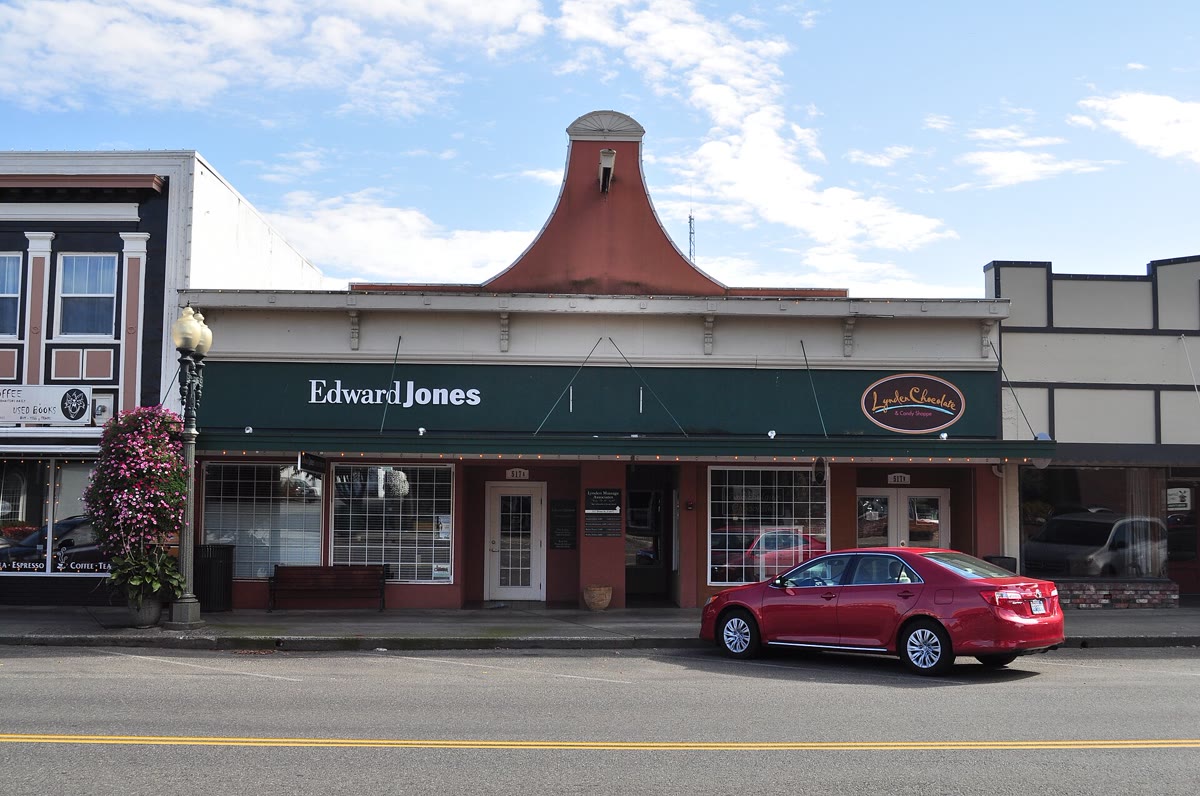
Lynden sits in Whatcom County's Nooksack Valley, about fifteen miles north of Bellingham and a short drive from the Canadian border. Dutch immigrants arrived in force around 1900 for the farming country and built churches, schools and businesses that still shape the town. Later in the twentieth century Lynden put that heritage on the streetscape. Holland Days began in 1985. The 1980s also brought Dutch-inspired Front Street facades and a tall windmill anchoring the Dutch Village area.
Stroll Front Street for the themed storefronts and bakery stops. HistoryLink still describes Lynden as home to Washington's largest Dutch community. Compared with Leavenworth, it's a quieter theme town most weekends — more Main Street than festival stage — which is useful if you want room to wander without a parade schedule.
Background: HistoryLink Lynden essay
Roslyn: coal town and Northern Exposure
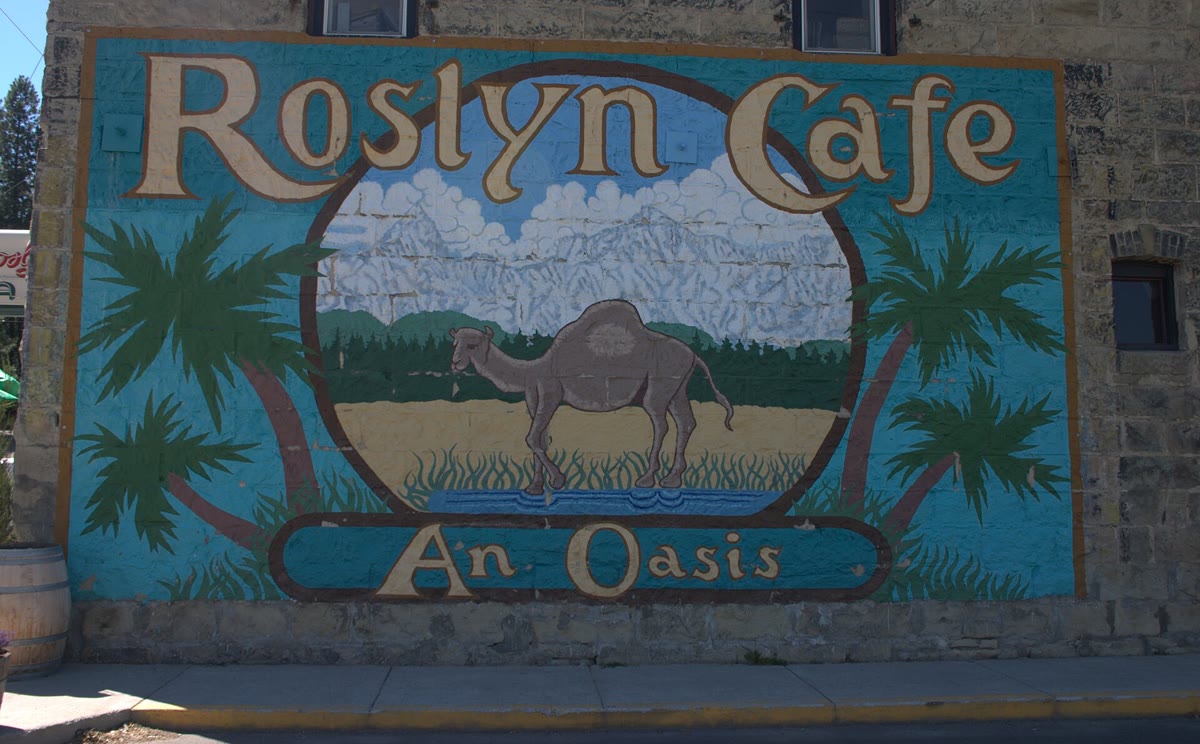
Roslyn began as a Cascade foothills coal town just northwest of Cle Elum. From 1990 to 1995 it stood in as Cicely, Alaska, for the TV series Northern Exposure. Producers liked the early-1900s streetscape and the snow. Exteriors were shot on Pennsylvania Avenue and nearby streets; many interiors were filmed in a Redmond studio about ninety miles west.
The Roslyn Historical Museum at 203 West Pennsylvania Avenue keeps mining history and show memorabilia, including a map of filming sites. Ask about current hours and the suggested donation. The Roslyn Cafe camel mural at Pennsylvania and Second appeared in the show's opening credits; the camel art predates the series, and the apostrophe in "Roslyn's" came and went with filming. The Brick Saloon and other storefronts still read as a working small town. Stay on public sidewalks and in open businesses. Residential blocks are not a backlot.
Museum: roslynmuseum.com
Port Gamble: New England company town
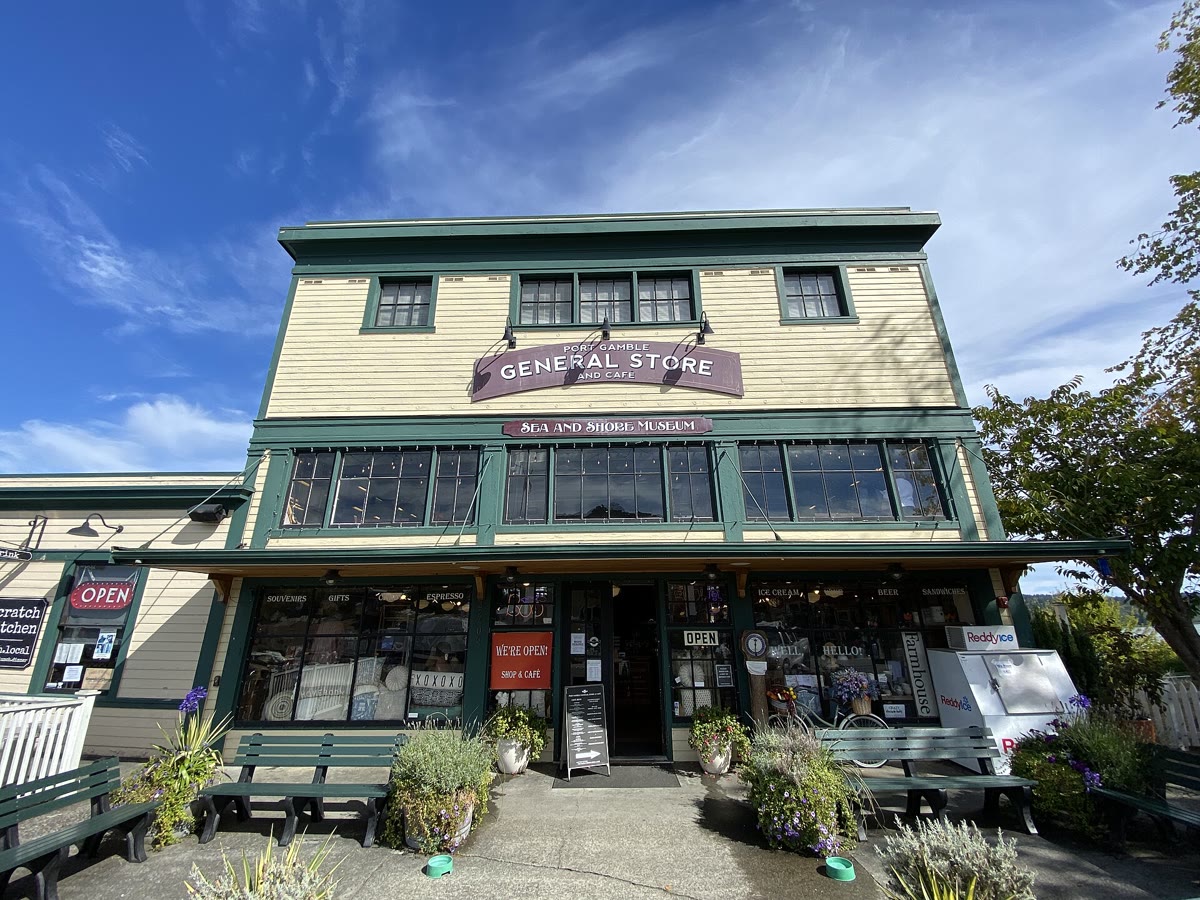
Port Gamble sits on the Kitsap Peninsula above Hood Canal and is a National Historic Landmark. William Talbot and Andrew Pope founded a sawmill on Gamble Bay in 1853. That mill ran until November 1995 and was then the longest continuously operating mill in the United States. The company town above the mill kept a New England look — steepled church, clapboard houses, maple-lined streets — because Pope & Talbot built and rebuilt in that style for decades.
The mill is gone. The historic district is open for visitors: shops in period buildings, the general store, expansive grounds and cemetery views over the water. Ownership now sits with Rayonier-related entities. Port Gamble still presents itself as a preserved company town rather than a free-for-all tourist strip. Grab a walking-tour pamphlet on site when available, and stick to posted public areas.
Official site: portgamble.com
Concrete: named for what it made
Concrete, in the Skagit Valley on the way toward the North Cascades, took its name from the cement plants that built the town. The Superior Portland Cement plant was completed in 1908 and later operated until 1967; its silos still mark Silo Park. The Henry Thompson Bridge (built 1916–1918) was once billed as the world's longest single-span cement arch and is listed on the National Register. The Concrete Theatre (1923) remains a working single-screen house.
Silo Park has a playground and a seasonal spray pad. The Sbáliuqw Interpretive Trail and Baker River Clubhouse exhibits typically run May through September. The Concrete Chamber lists walking-tour stops and current details. This stop is less costume theme and more industrial oddity — a town that kept the product in its name and left the silos standing where you can see them from the park.
Chamber and sights: concrete-wa.com
How to link them without rushing
You don't need to hit all seven in one trip. A Cascades weekend can cover Leavenworth and Winthrop when SR 20 is open, with Roslyn as an I-90 detour near Cle Elum. Kitsap works as its own day: Poulsbo and Port Gamble sit on the same peninsula. Lynden pairs cleanly with a Bellingham or Mount Baker drive. Concrete fits a North Cascades Highway approach from the west.
A small daypack and a Washington road atlas earn their keep more often than another souvenir mug when you're hopping towns and passes in one stretch.
Before you go
- Check passes and ferries. SR 20 over the North Cascades closes in winter. Kitsap trips may involve Washington State Ferries schedules.
- Time Leavenworth and Winthrop carefully. Peak weekends fill early; midweek is calmer.
- Confirm museum hours the morning of your visit. Roslyn, Poulsbo and Concrete schedules shift by season.
- Stay on public streets, parks and open businesses. Company-town and residential blocks are not open-house museums.
- Bring layers. Cascade foothills and Methow Valley weather can swing hard in a single afternoon.
Washington's themed towns work because the look is on the street, not behind a ticket booth. Pick the ones that match your route, walk the main blocks, and leave room for a bakery stop or a museum map before you roll to the next one.
Looking for more unusual Washington trips? Start at our Washington hub, or see unique places in Washington and our Washington scenic road trip.
More Washington: Washington state guide · The most unique places in Washington · Washington scenic road trip · Washington places with a haunted reputation
Heading south? Oregon has its own lineup in Oregon's most unusual small towns, from a Bavarian glockenspiel in Mount Angel to the bronze-lined Main Street in Joseph.