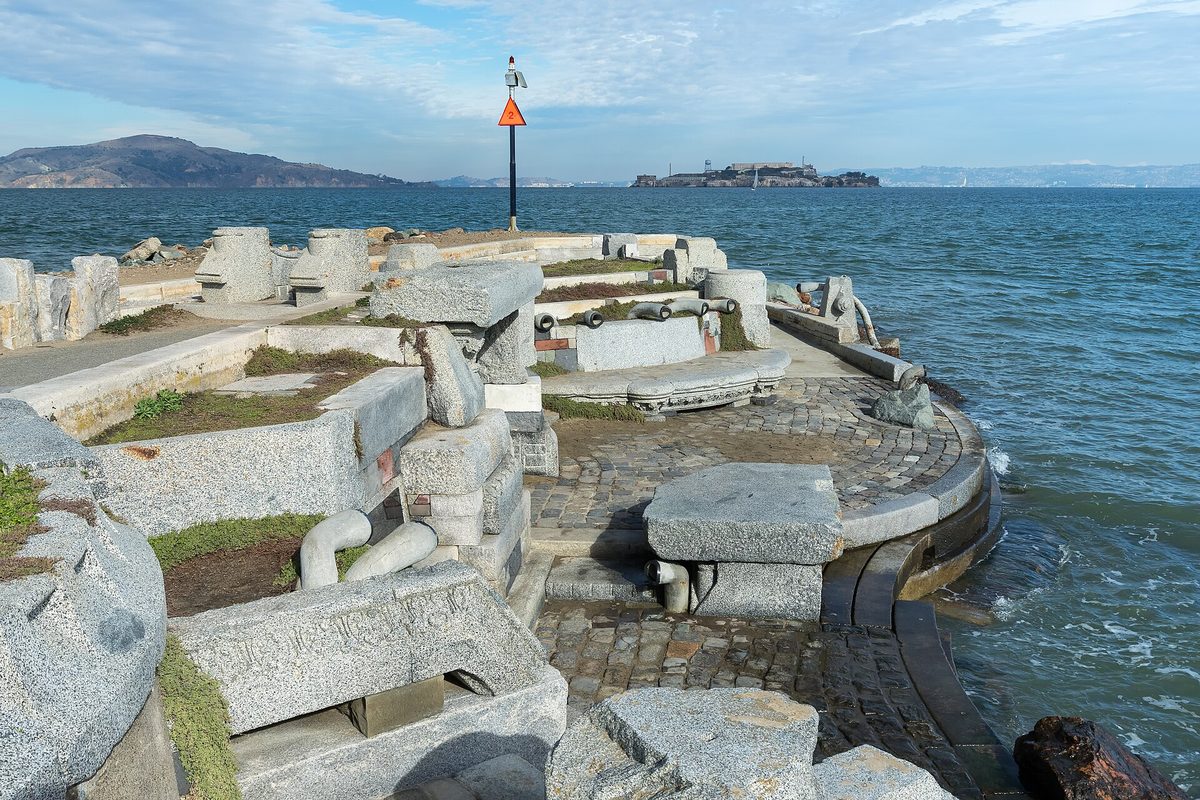
Most public art asks you to look. The Wave Organ asks you to sit down, put your ear near a pipe and wait. At the far end of a jetty in San Francisco's Marina District, the bay pushes water in and out of a set of pipes, and the pipes carry that slosh up to stone seats where you can hear it. It isn't a melody. It's closer to the bay breathing.
The Exploratorium built it and still describes it on its own visit page, and this guide leans on that page, the city's park listings and NOAA's tide predictions. Everything here was checked on November 10, 2026. The short version: it's free, it's outdoors, and the tide decides how good your visit sounds.
How a jetty learned to sing
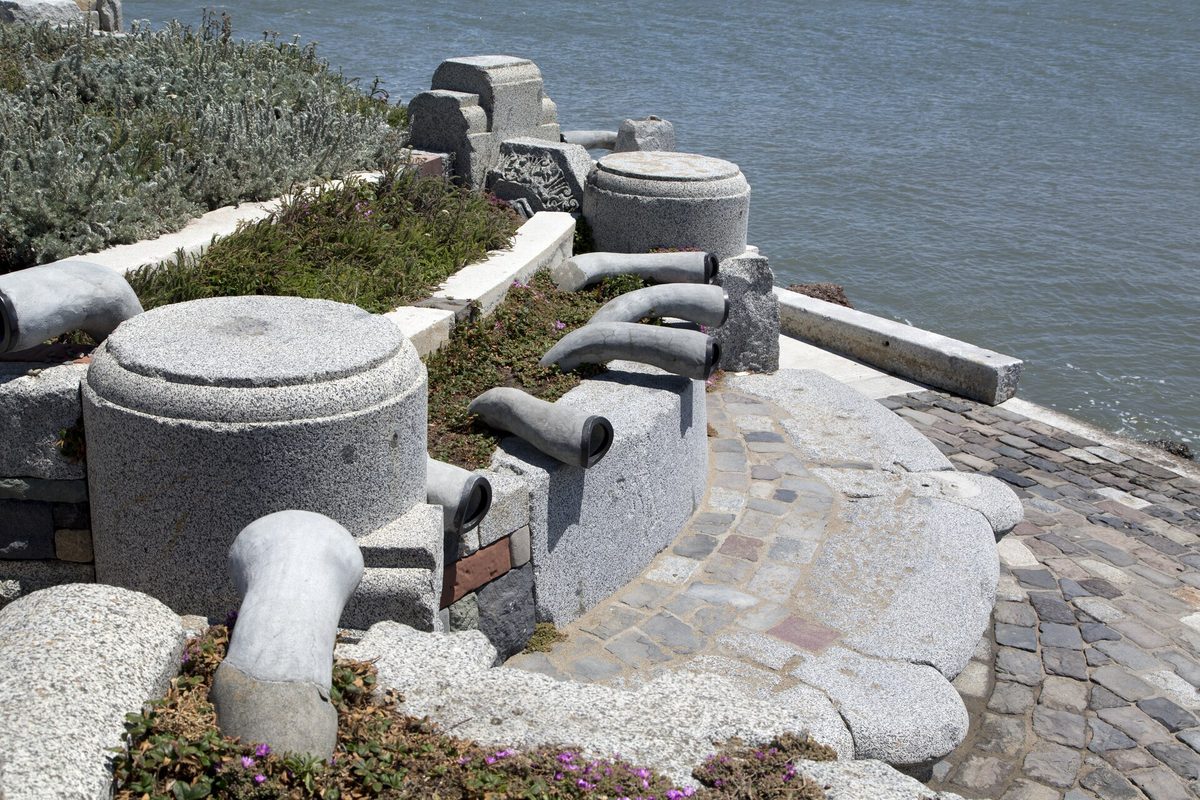
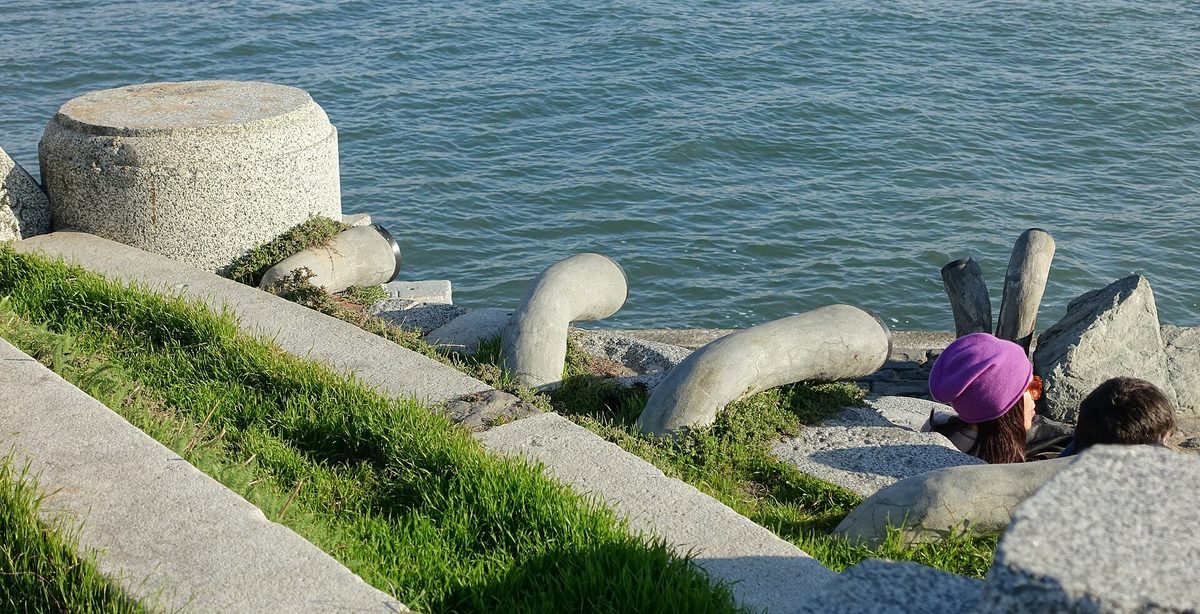
The Exploratorium calls the Wave Organ a wave-activated acoustic sculpture. There are 25 organ pipes made of PVC and concrete, set at different heights around the site so they work as the tide rises and falls. The sound comes from waves striking the pipe ends and from water moving in and out of the pipes. What reaches you at the listening end is a mix of gurgles, low rumbles, sloshes and hisses.
The museum is upfront that the sound is subtle. Its description says the piece asks visitors to become sensitized to its music, and to the sounds of the place around it. That's a fair warning. If you show up expecting a pipe organ, you'll leave puzzled. Give it ten quiet minutes and you start to notice that the pipes don't all sound alike. NBC Bay Area puts that down to the different lengths of tube, which is a good excuse to move from bench to bench and compare.
The idea came from recordings artist Bill Fontana made of a vent pipe on a floating concrete dock in Sydney, Australia. Peter Richards, a longtime senior artist at the Exploratorium, got a National Endowment for the Arts planning grant in 1980 to study the effect. A rough prototype went in at the same spot for the New Music '81 festival. NBC Bay Area's 40th-anniversary story adds that Richards also took a cue from a museum exhibit called Pipes of Pan, which showed how tubes of different lengths favor different pitches.
Built from a demolished cemetery
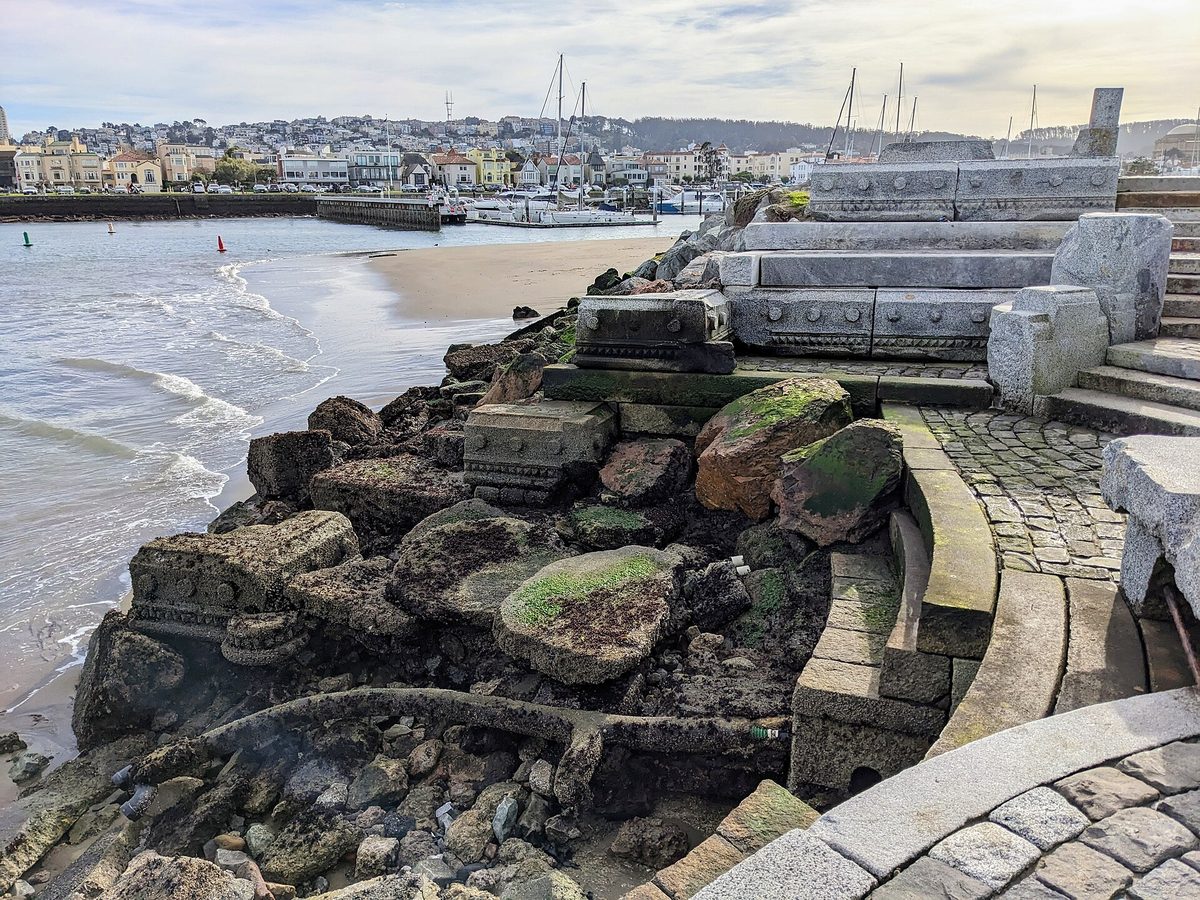
Look closely at the benches and you'll spot fluted edges, carved trim and the odd slab that clearly used to be part of something grander. According to the Exploratorium, the jetty itself was built from material taken from a demolished cemetery. NBC Bay Area names it: stonemason George Gonzalez pulled ornate carved stones from a city salvage yard, many of them from Laurel Hill Cemetery, which was relocated in 1939. He also gathered cobblestones from the jetty with help from the California Conservation Corps. Those stones had first come to the city as ballast in sailing ships.
Gonzalez, a stonemason trained in France, shaped all that into terraces, alcoves and a small stone vestibule. The museum's founding director, Frank Oppenheimer, pushed for permits and money, but construction didn't start until September 1985, seven months after he died. The Wave Organ was finished in May 1986 and dedicated to his memory that June. NBC dates the official opening to June 8, 1986, so the piece turned 40 this year.
It has held up well. NBC reported that the 1989 Loma Prieta earthquake moved one stone a couple of inches, and that a ramp added about 15 years ago, paid for by a fan's gift, made the site accessible to wheelchairs. Gonzalez told the station he guaranteed the work for 500 years. Richards said he once turned down an offer to move it across the channel during an earlier harbor proposal, because the remote spot was the point.
Time it with the tide
The Exploratorium's advice is short: the Wave Organ sounds best at high tide, so check the tides. Its own link goes to NOAA's predictions for station 9414290, San Francisco, which sits by the Golden Gate a short way west of the Marina. That's the table to use.
San Francisco Bay usually gets two high tides a day, and they aren't equal. On the day we checked, NOAA predicted a high of about 4.7 feet just after midnight and a much bigger one, about 6.1 feet, at 11:04 a.m. Pick the bigger daytime high when you can, since more water reaches more of the pipes.
The strongest windows this season line up with California's King Tides, which the Coastal Commission lists for November 24 to 26 and December 23 to 25, 2026, and January 21 to 22, 2027. NOAA's predictions for the San Francisco station put a 7.0-foot high at 10:49 a.m. on November 25 and a 7.2-foot high at 10:37 a.m. on December 24. Those are Pacific times. Arrive a little before the peak and stay through it. A low tide visit isn't wasted, since the stonework and the views carry it, but the pipes get quieter.
If you want a preview, Wikimedia Commons hosts a short recording made at the site in September 2011.
Getting there and what to expect
The Exploratorium gives the location as 83 Marina Green Drive, San Francisco, CA 94123. From the Marina Green, follow the road out along the harbor toward the yacht clubs and keep going to the tip of the jetty. It's a flat walk with the Golden Gate Bridge on one side and Alcatraz, Angel Island and the Fort Mason piers on the other. KQED notes that people fish from the jetty too, so give casting lines some room.
There's no ticket and no fee. San Francisco Recreation and Parks lists restrooms at the Marina Green and calls street parking limited, which matches what you'd expect on a sunny weekend. The jetty is exposed, so wind off the bay is part of the experience. A packable windbreaker makes a long listening session more comfortable.
One thing to watch: Rec and Park's Marina Improvement and Remediation Project plans a new 225-foot breakwater at the West Harbor jetty, the same jetty the Wave Organ sits on, with West Harbor breakwater work expected to start in mid-2027. In February 2024 the Board of Supervisors passed an ordinance that limits West Harbor marina expansion beyond the Wave Organ's western edge. Construction hasn't started yet, so check the project page before a visit from 2027 on.
Pair it with the museum that built it
The Wave Organ dates from the years when the Exploratorium lived in the Palace of Fine Arts, which you can see from the Marina Green. The museum is now at Pier 15 on the Embarcadero. Its posted hours are Tuesday to Saturday 10 a.m. to 5 p.m. and Sunday noon to 5 p.m. (members and donors from 10), closed Monday, with After Dark evenings Thursday from 6 to 10 p.m. It's a natural second stop on the same day, especially if the high tide falls in the morning.
If you like the idea of a landscape that plays itself, Seattle has a cousin on the shore of Lake Washington. A Sound Garden uses wind instead of water, and the band Soundgarden took its name from it. Our guide covers how it works and its current access rules. For more Bay Area oddities, start our Pacific Coast Highway oddities trip at Point Bonita, just across the Golden Gate.
Before you go
- Check NOAA station 9414290. Aim for the higher of the day's two high tides, and arrive a little before the peak.
- Plan for wind. The jetty is open to the bay on three sides. Bring a layer even on a warm day, and maybe compact binoculars for Alcatraz and the bridge.
- Use the Marina Green restrooms first. Rec and Park lists restrooms at the green, the easy stop before the walk out.
- Stay on the stonework during King Tides. The Coastal Commission's King Tides page has safety tips for viewing the year's highest tides.
- Give it time. Ten quiet minutes at one pipe beats a quick lap of all of them.
Sources
- Exploratorium: The Wave Organ (visit page; history, 25 pipes, high-tide advice, location): exploratorium.edu
- Exploratorium: Wave Organ exhibit page: exploratorium.edu
- NBC Bay Area, "San Francisco's beloved Wave Organ turns 40," Joe Rosato Jr., June 8, 2026: nbcbayarea.com
- KQED, "San Francisco's Wave Organ Brings Sounds of the Bay to Life": kqed.org
- NOAA Tides & Currents: tide predictions, station 9414290 San Francisco (checked November 10, 2026): tidesandcurrents.noaa.gov
- California Coastal Commission: California King Tides Project (2026–27 dates): coastal.ca.gov
- San Francisco Recreation and Parks: Marina Green (restrooms, parking): sfrecpark.org
- San Francisco Recreation and Parks: Marina Improvement and Remediation Project and project FAQ: sfrecpark.org
More California: California state guide · The most unique places in California · Pacific Coast Highway oddities · California ghost towns · Yosemite firefall · Unusual Pacific Coast waterfalls · Seattle's Sound Garden