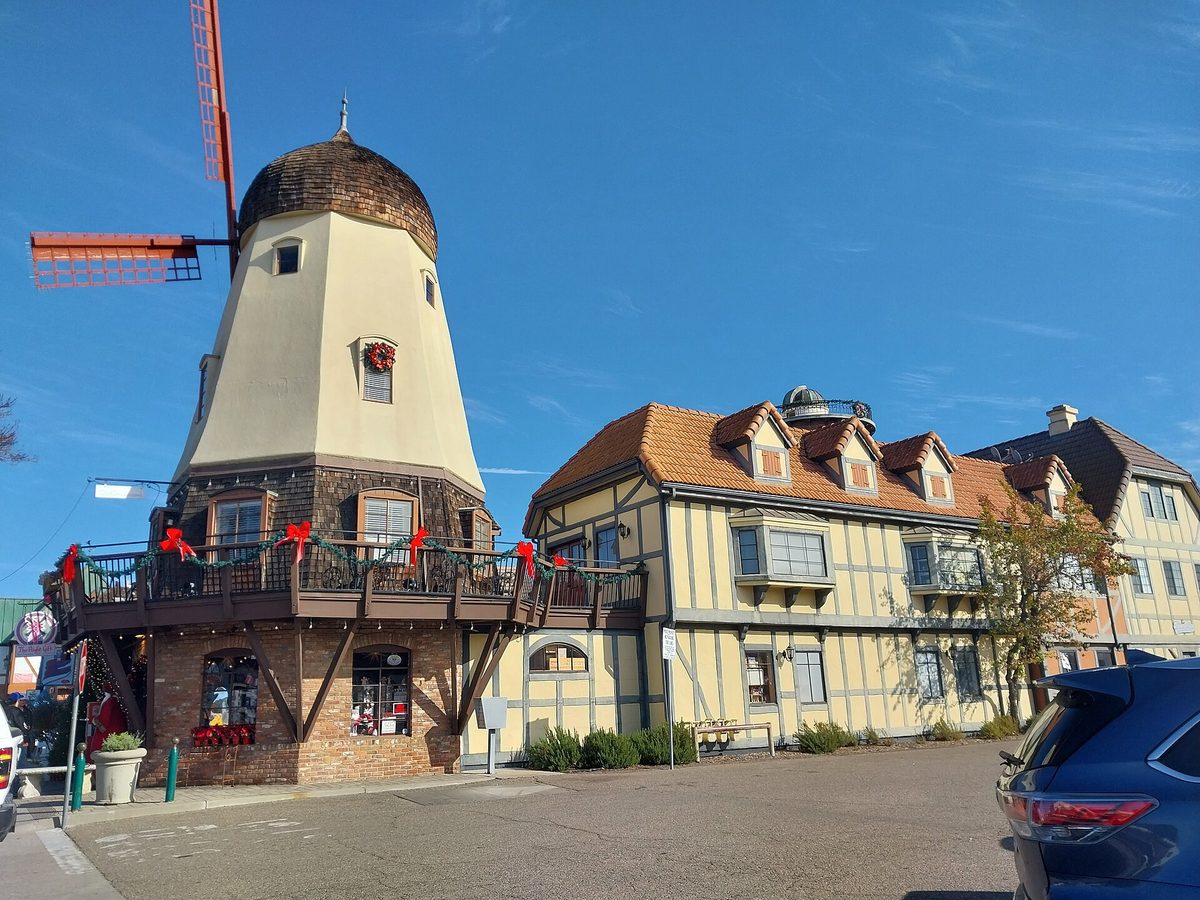
California's big-name towns get the crowds, but the small ones are where the state gets strange in the best way. One Humboldt County dairy town spent its butter money on Victorian storefronts, and the whole place is now a state landmark. A river town in the Delta was built by Chinese merchants on leased land in 1915 and still looks the part. A Danish colony in the Santa Ynez Valley decided after World War II that it should look like Denmark, and the windmills went up soon after.
The seven towns below run north to south, from the redwood coast to the Colorado Desert. Each is small enough to walk, and each has at least one thing you'll only find there. We checked hours, fees and holiday dates on official museum, city, county and State Parks pages on November 26, 2026, which happens to be Thanksgiving, so a few holiday closures are flagged along the way.
Ferndale: the town that butter built
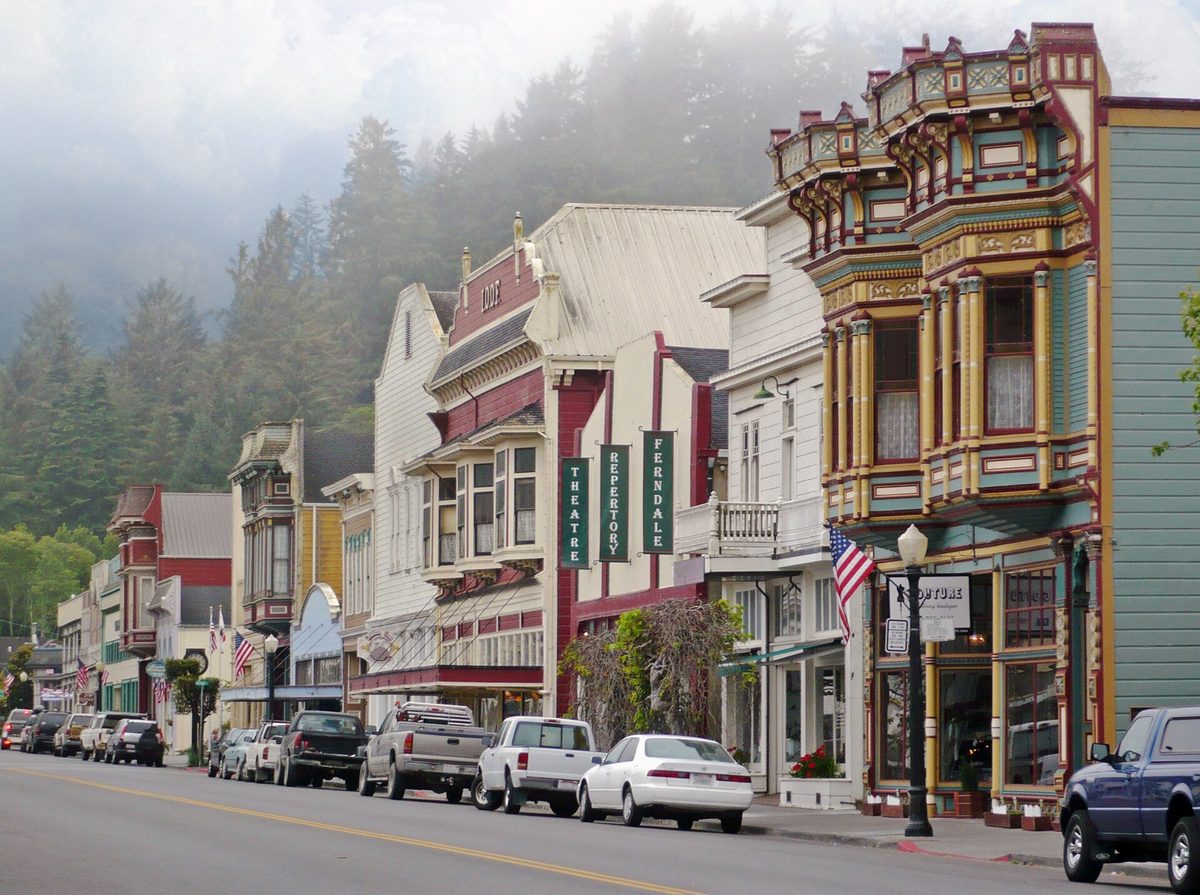
Ferndale's look comes straight out of the dairy barn. Danish farmers arrived in the Eel River Valley in the 1870s, and by 1890 there were eleven creameries around town, according to the city's own history. San Francisco paid top prices for Ferndale butter, the town picked up the nickname Cream City, and the money went into houses. The ornate Victorians from that boom still go by the name Butterfat Palaces.
The state named the entire town California Historical Landmark No. 883 in 1975, and Main Street joined the National Register as a historic district in 1994. Walk the four blocks between Shaw and Francis Streets and you'll see two eras side by side: false-front Victorian storefronts from 1880 to 1900, and plain stucco shops from the 1920s and '30s. The National Register nomination notes how well the two styles get along, and it's right.
For the backstory, the Ferndale Museum at 515 Shaw Street is open Wednesday through Saturday, 11 a.m. to 4 p.m.
Ferndale's oddest tradition happens on Memorial Day. Metal sculptor Hobart Brown started the Kinetic Grand Championship in 1969 as a two-block dash down Ferndale's Main Street. Now it's a three-day, 50-mile race for human-powered art vehicles over road, sand, mud and Humboldt Bay, starting on the Arcata Plaza and finishing on Main Street in Ferndale.
December is the other big season. The town lights what it calls America's largest living Christmas tree, a spruce at the end of Main Street, on Sunday, December 6, 2026, at 5:30 p.m., a tradition since 1934. Farmers roll decorated tractors down Main Street in the Lighted Tractor Parade on Sunday, December 20, starting at 6 p.m.
Bodega and Bodega Bay: the town from The Birds
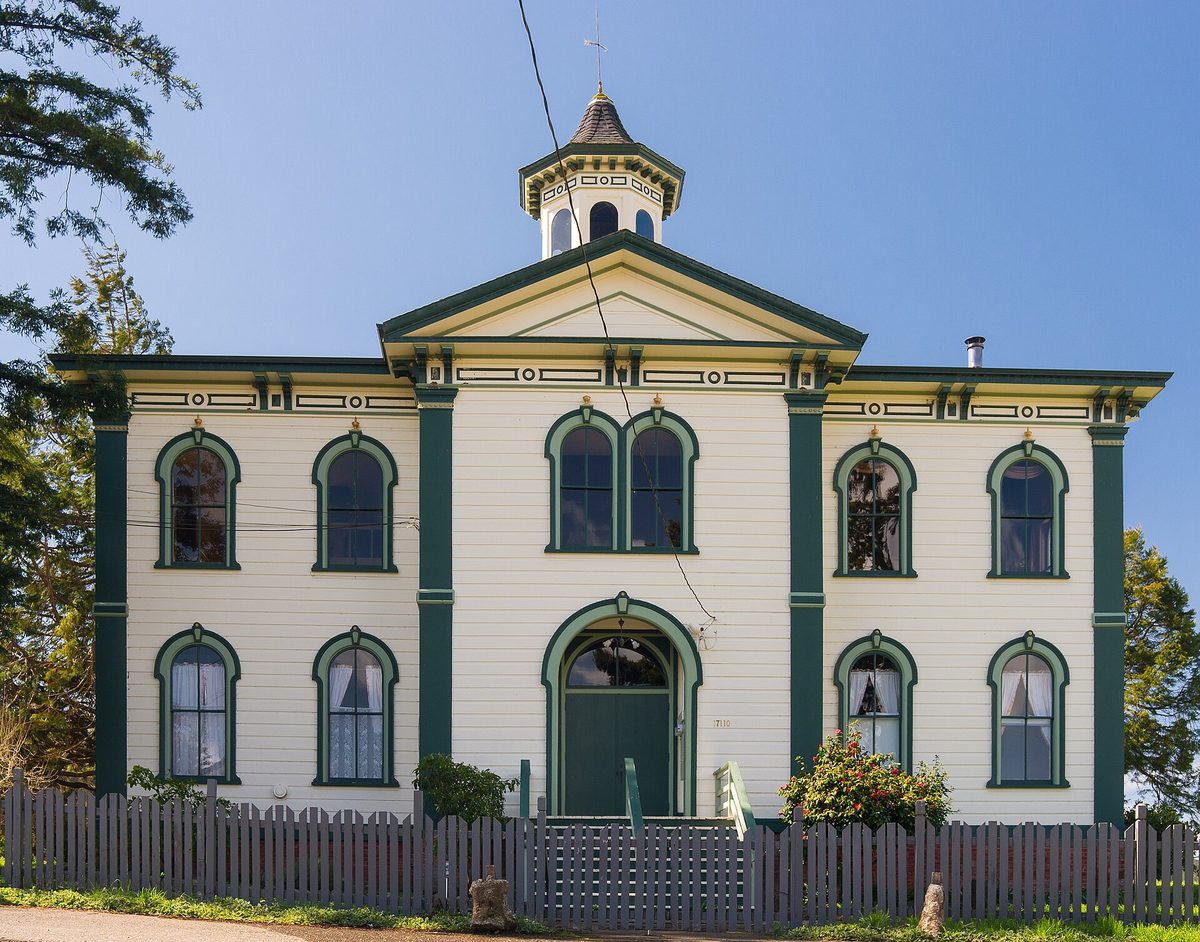
Alfred Hitchcock set The Birds (1963) in Bodega Bay, but the scene everyone remembers was shot five miles inland, in the village of Bodega. That's where the Potter Schoolhouse stands, the two-story building behind the playground where the crows gather on the jungle gym.
The schoolhouse went up in 1873 on land donated by Samuel Potter, then the Sonoma County sheriff. By the early 1960s it had closed, and it was headed for demolition. Hitchcock's crew repaired the facade for filming, and the building survived. Today it's a private home at 17110 Bodega Lane, so enjoy it from the public road, which gives you a clear view of the whole front.
Right next door is St. Teresa of Avila Church, a white wooden church dedicated in 1862 that shows up in the background of the film. Ansel Adams photographed it in 1953 for his print "Church and Road," and it's California Registered Historical Landmark No. 820. It's an active parish, with Mass at 9:30 a.m. on Sundays and a 5 p.m. vigil on Saturdays.
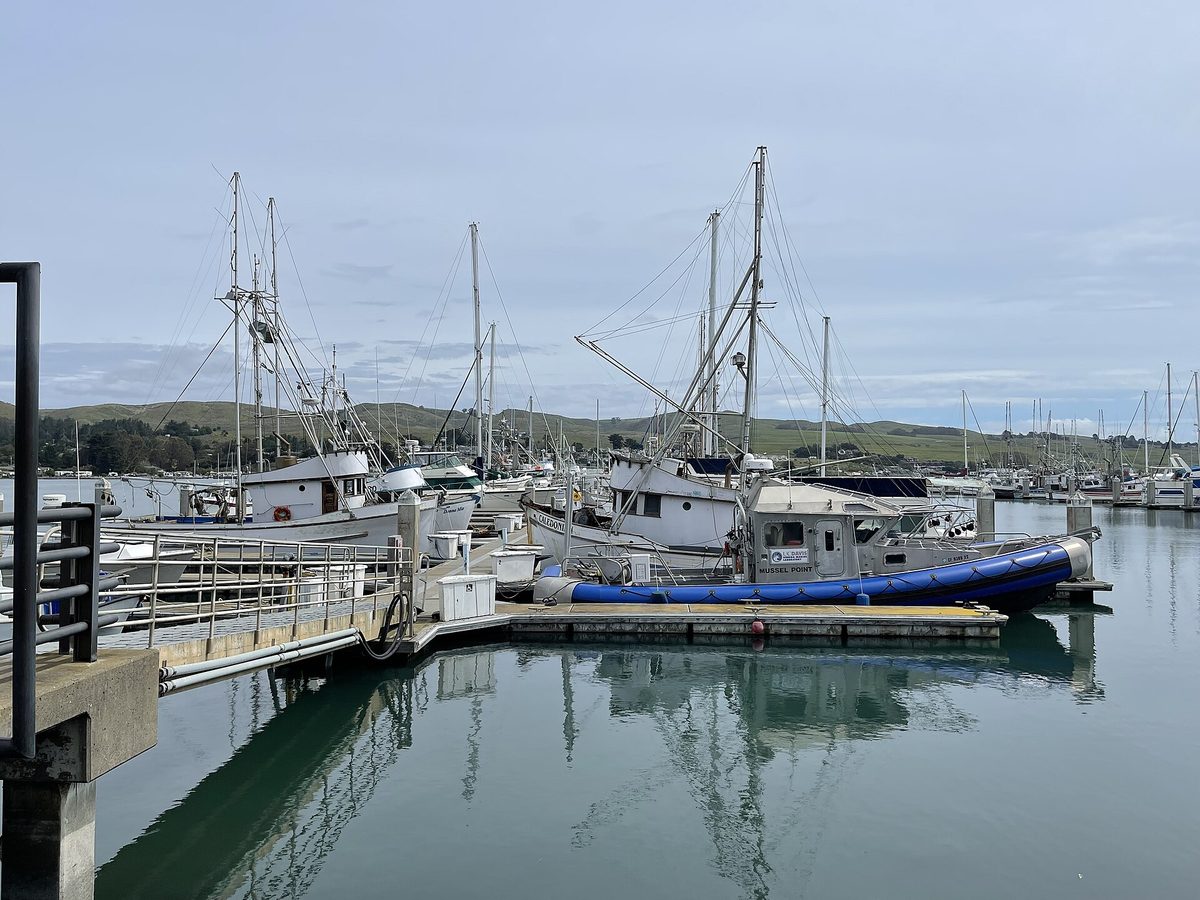
Then drive west to the real Bodega Bay. The dock and restaurant scenes were filmed at The Tides Wharf on Highway 1. Sonoma County's tourism bureau passes along the Inn at the Tides' account that the 1960s owner, Mitch Zankich, agreed to the filming on three conditions: the movie town would be called Bodega Bay, the male lead would be named Mitch, and Zankich would get a speaking part. The restaurant has been remodeled since, and the gift shop keeps a replica of the original front. It's open daily, 8 a.m. to 9 p.m.
Sonoma Coast State Park's beaches start at Bodega Bay and run north to the Russian River, and State Parks calls this stretch one of the best whale-watching spots in California in winter. Leave the drone at home; the park bans them.
Locke: a Chinese American town on the Sacramento River
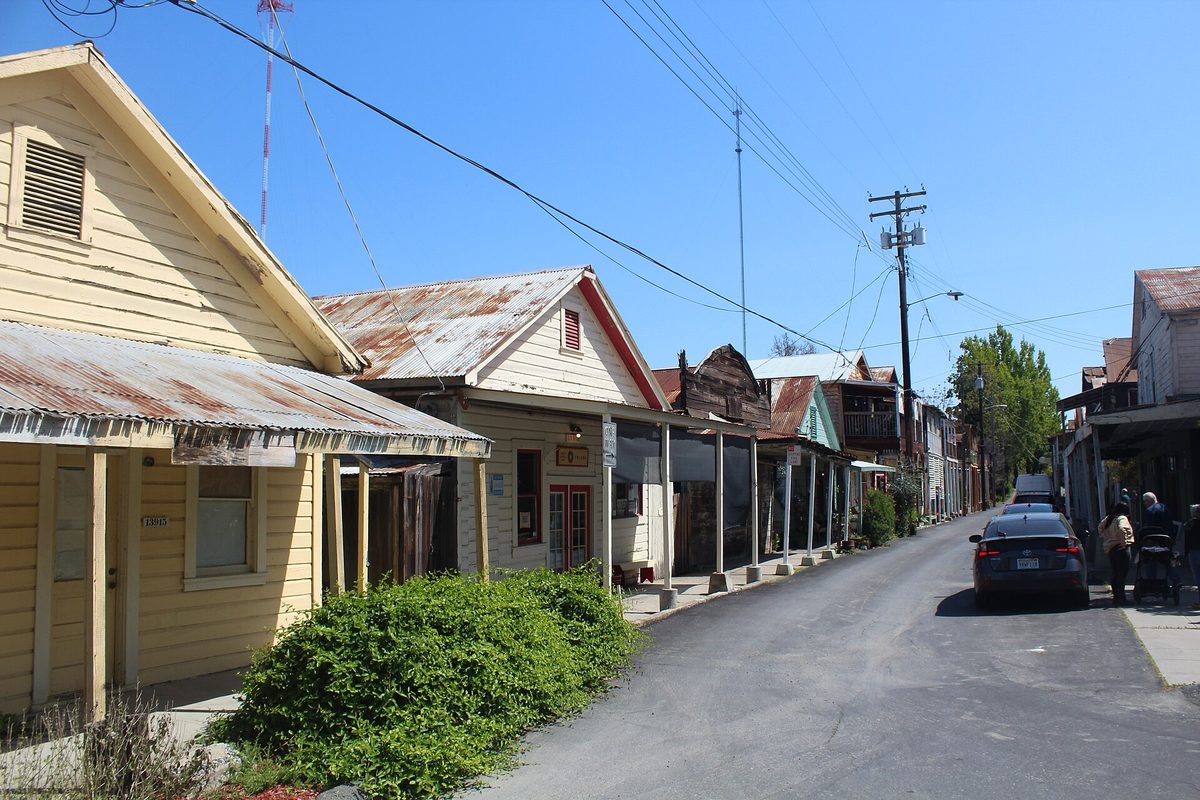
Locke sits on River Road about 30 miles south of Sacramento, and it looks like nowhere else in the state. Weathered two-story wooden buildings with upper balconies line its narrow Main Street.
Its story starts with a fire. On October 7, 1915, the Chinatown in neighboring Walnut Grove burned. Several Chinese businessmen from Heungshan County, now Zhongshan, in Guangdong decided to start over a mile to the north, on about nine acres along the levee that George Locke leased to them on a verbal agreement. California's 1913 Alien Land Law kept non-citizens from owning land, so they owned the buildings and the Locke family kept the ground. The town averaged about 600 people, the Park Service says, and swelled to 1,500 on weekends and in the growing season.
California State Parks describes Locke as the largest and most intact surviving example of a historic rural Chinese American community in the United States, and it became a National Historic Landmark district in 1990. More than 50 historic buildings remain, and people still live in many of them, so treat it as the neighborhood it is.
Two small museums cover the history. The Locke Boarding House Museum at 13916 Main Street, built in 1909 and run by the Kuramoto family from 1921 until the family was interned in 1942, is free and open Friday through Sunday, 11 a.m. to 4 p.m. The Dai Loy Museum at 13951 Main Street is a gambling hall built in 1915 that ran until Sacramento County shut it down in 1950. Its name means "Big Welcome," and it's open Friday 11 to 4 and weekends 11 to 4:30. Groups of ten or more can book a guided town tour through the Locke Foundation.
Solvang: the Danish colony that went all in
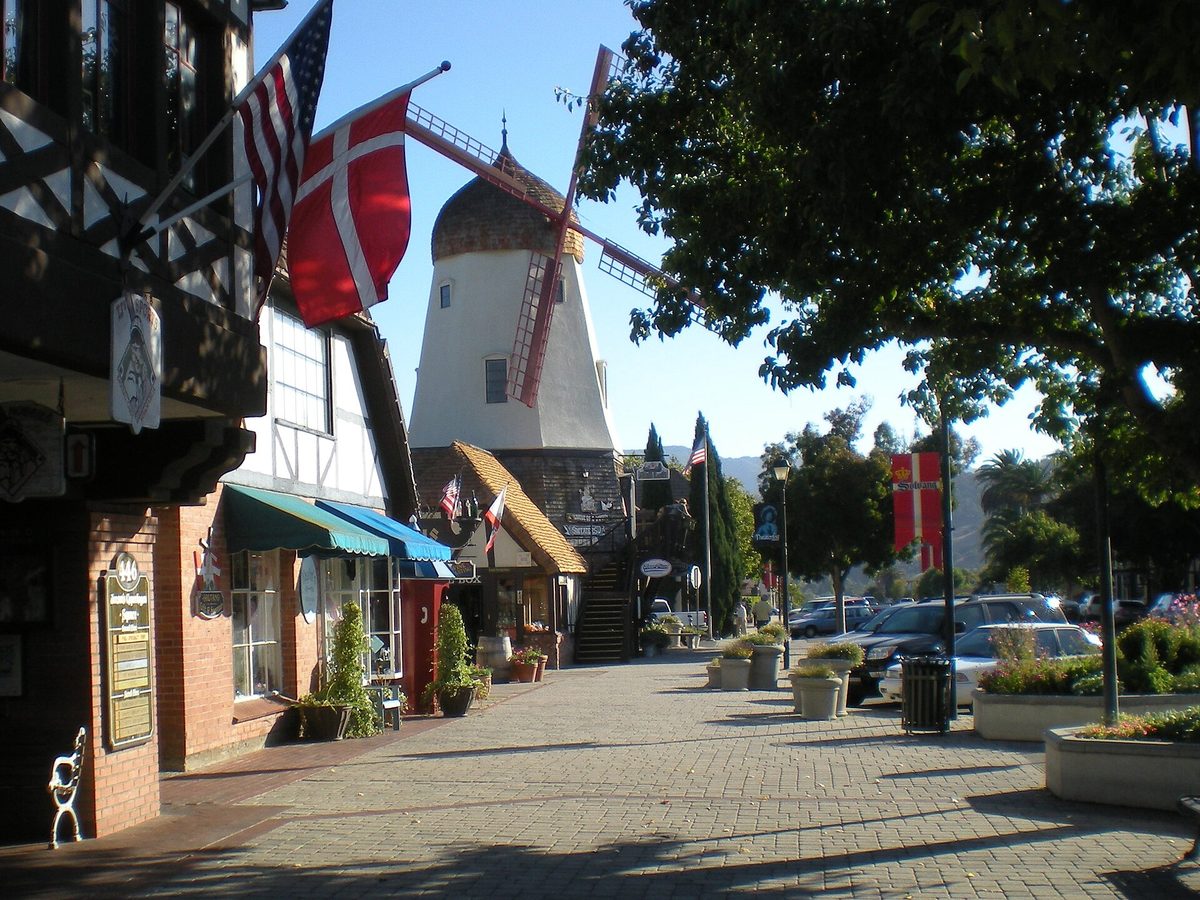
Solvang began as a real Danish settlement, and the windmills came later. In January 1911, three Danish immigrant educators and pastors bought almost 9,000 acres in the Santa Ynez Valley, named the colony Solvang, or "sunny field," and advertised it in Danish-language papers. Early buyers came from California, the Midwest and Denmark. They built a folk school, ran dairies, and threw a Danish party for the town's 25th anniversary in 1936 that turned into the annual Danish Days.
The storybook look is a postwar decision. After World War II, according to the Elverhøj Museum, Solvang chose Danish Provincial architecture, remodeled old buildings, put up windmills, and drew a wave of visitors after a 1947 Saturday Evening Post feature. The museum says only about 10 percent of residents claim Danish ancestry now, but the half-timbered fronts, Danish flags and windmills set the tone downtown.
The Elverhøj Museum itself is the best place to sort the real history from the theme. It's a hand-built home in the style of an 18th-century Jutland farmhouse, started in 1949 by artists Viggo and Martha Brandt-Erichsen, at 1624 Elverhoy Way. It's open Thursday through Monday, 11 a.m. to 5 p.m., and admission is $5 for adults, with children under 12 free. It closes on Thanksgiving, Christmas Eve, Christmas Day, New Year's Eve and New Year's Day. Upstairs at The Book Loft, 1680 Mission Drive, the Hans Christian Andersen Museum is open daily, 10 a.m. to 5 p.m.
Timing is good right now. Solvang Julefest runs November 27, 2026, through January 3, 2027, with the tree-lighting weekend December 4 to 6 and a four-museum Julefest crawl on Saturday, December 12.
Ojai: an outdoor bookstore with an honor box
Ojai was a ranch town called Nordhoff until an industrialist decided to remake it. Edward Libbey led a rebuild of the main street in a Mediterranean style starting in 1914, and in 1916 he gave the town its post office tower, designed by Mead and Requa. It's three stories tall with a tiled dome, and Ventura County notes it appears on the city seal. The town took the name Ojai in 1917.
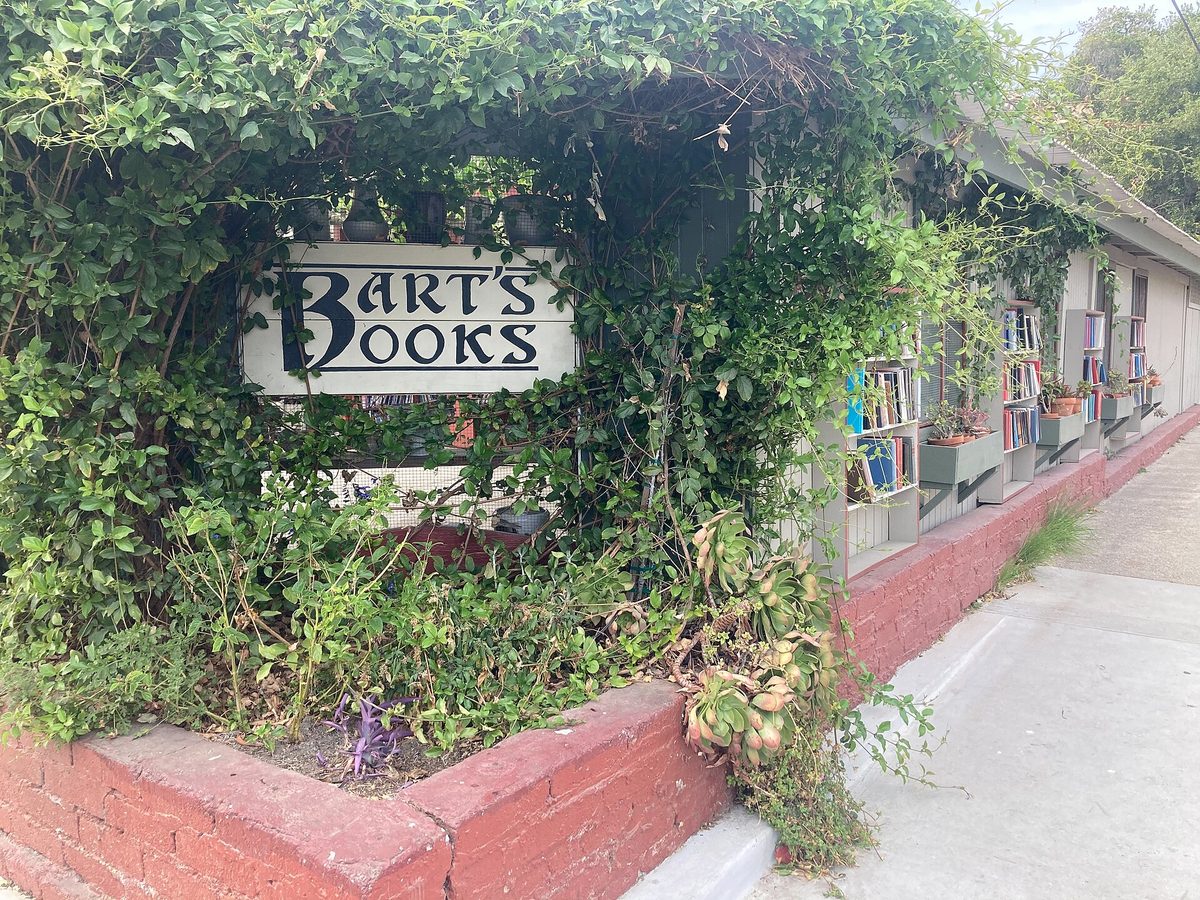
The stop that makes Ojai unusual is Bart's Books at 302 West Matilija Street, which calls itself the world's largest outdoor bookstore. It started in 1964, when Richard Bartinsdale built bookcases along the sidewalk outside his house for his overflowing collection and left coffee cans on top for payment. The bargain shelves on the outside walls still run on the honor system, and the open-air store holds more than 130,000 used and new books. Bart's is open every day, 10 a.m. to 6 p.m., rain days and most holidays included. The two exceptions are Thanksgiving and Christmas.
Back on the main street, the Ojai Valley Museum at 130 West Ojai Avenue fills the former St. Thomas Aquinas church, which Mead and Requa rebuilt after a 1917 fire. It's open Thursday through Sunday, 10 a.m. to 4 p.m., with a suggested $5 donation, and it's free all day, 10 to 7, on the third Friday of each month. It closes for Thanksgiving, Christmas and New Year's Day.
End the day with what locals call the Pink Moment, when the setting sun turns the Topatopa Mountains above the valley a rosy pink. The Ojai Visitors Bureau suggests watching from Dennison Grade.
Julian: a gold camp that switched to apples
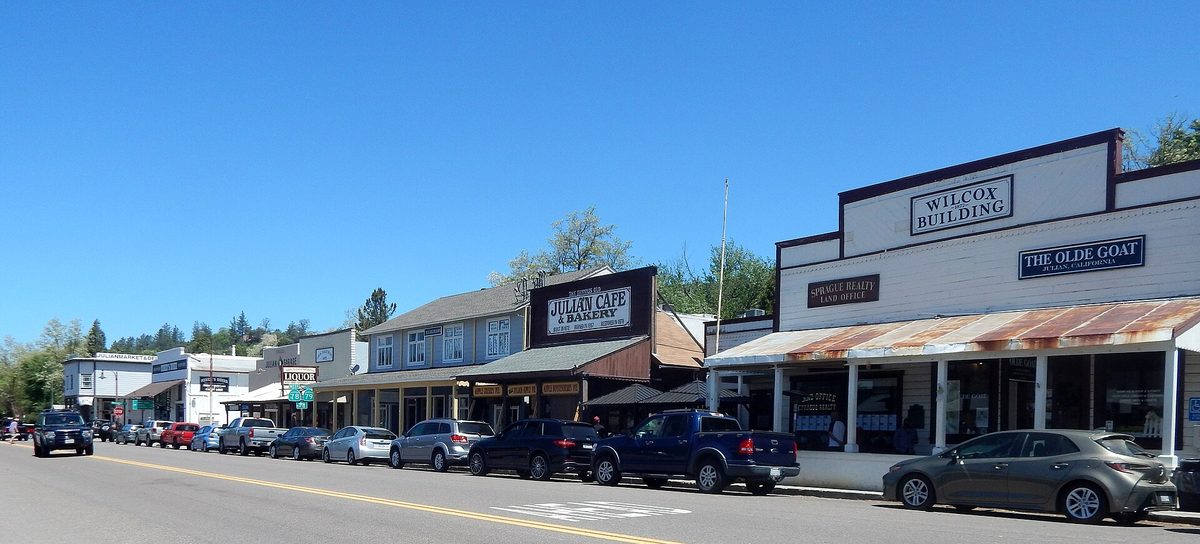
Julian's gold rush started with a man watering his horse. In the winter of 1869 to 1870, Fred Coleman, a Black rancher and experienced miner, spotted gold in a creek near present-day Julian and started panning, according to the Julian Chamber of Commerce. Within weeks, more than 800 prospectors had arrived, and Coleman was elected recorder of the new mining district. Drury Bailey laid out the town and named it for his cousin, Michael Julian. The state's landmark plaque adds that by 1906 most of the mines had stopped paying, and that the town has since become better known for apples.
The Julian Gold Rush Hotel on Main Street went up in 1897, the project of Albert Robinson, who had been enslaved, and his wife, Margaret. The hotel calls itself the oldest continuously operating hotel in Southern California.
The Julian Pioneer Museum, in the restored Treshil blacksmith shop at 2811 Washington Street, is open Friday 11 a.m. to 3 p.m. and weekends 10 a.m. to 4 p.m., for a $5 donation, with kids 12 and under free. It's run by volunteers, so call ahead at 760-765-0227 before you drive up.
To get underground, the Eagle Mining Co. at 2320 C Street leads one-hour tours through old hard-rock tunnels, finishing with gold panning. Tickets are $20 for adults, $10 for kids 5 to 11 and $2 for kids 4 and under, and walk-ins are welcome. Its homepage lists 10 a.m. to 5 p.m. daily, while its tour page lists 10 to 4 on weekdays and 10 to 5 on weekends, so aim for earlier in the day.
Julian sits up in the mountains east of San Diego, and winter storms can bring snow and chain controls to Highways 78 and 79. Check Caltrans QuickMap before you go up.
Borrego Springs: mammoths and sea serpents in the desert
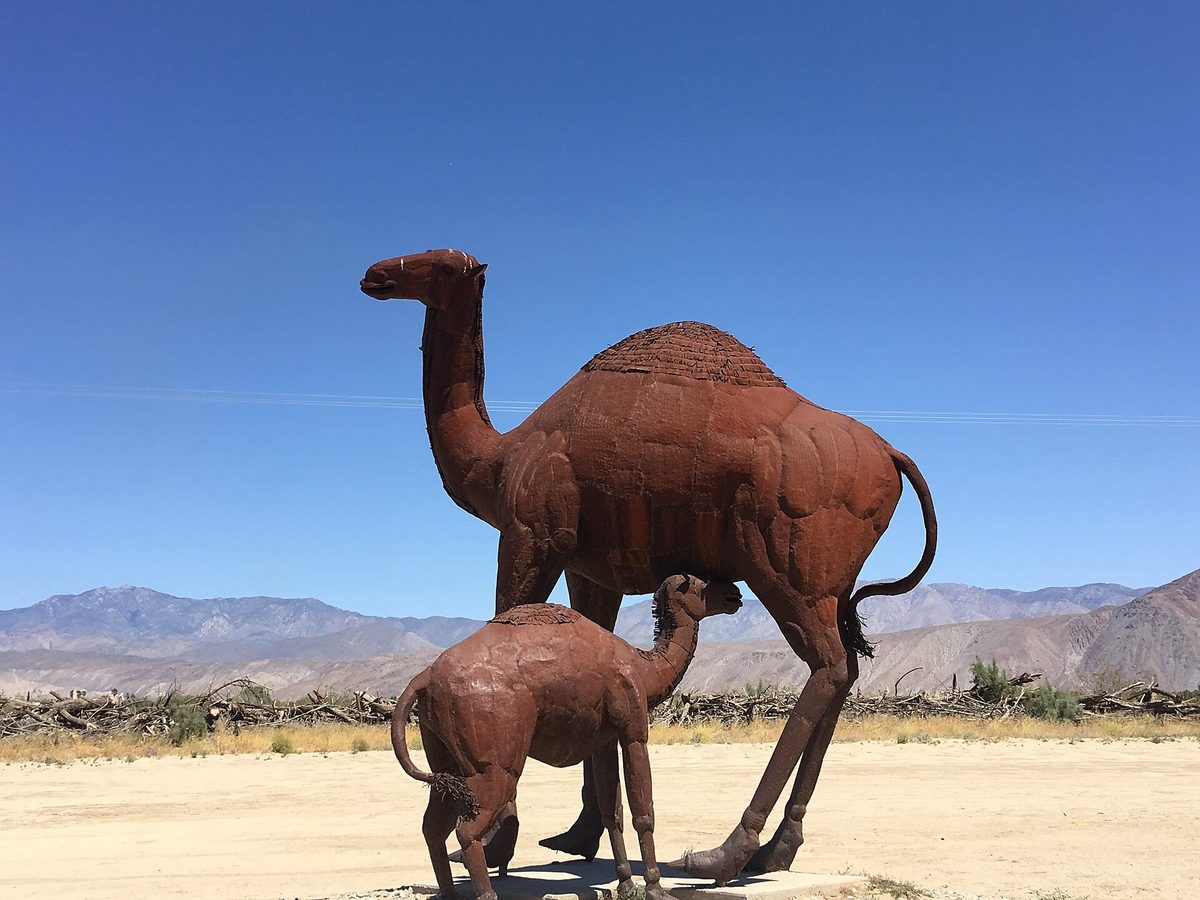
Borrego Springs is a desert town almost completely surrounded by Anza-Borrego Desert State Park, and the open land around it is full of rusted steel animals. Starting in 2008, landowner Dennis Avery commissioned self-taught sculptor Ricardo Breceda to fill his Galleta Meadows property with art. The result is more than 130 life-size metal sculptures in about 50 groupings, spread across roughly eight miles: mammoths, giant ground sloths, sabertooth cats, camels, a gold miner and his mule, and a 350-foot serpent whose body rises and dips through the sand.
The sculptures are free to see, scattered off Borrego Springs Road north and south of town. The Under the Sun Foundation, which looks after them, prints a free map you can pick up at the library, the Borrego Springs Art Institute and the Chamber of Commerce. The foundation asks visitors to admire the art from the ground, keep hands off, carry water, watch for snakes and stick to existing tracks, since some pieces sit out in soft sand where cars get stuck.
Stay for dark. Borrego Springs became an International Dark Sky Community in 2009, and DarkSky International notes that the surrounding 600,000-acre state park shields it from city light.
Anza-Borrego's visitor center at 200 Palm Canyon Drive is open daily, 9 a.m. to 5 p.m., holidays included, from October 1 through May 31, so it's open on Thanksgiving and Christmas this year. Font's Point is open from one hour before sunrise to one hour after sunset. Coyote Canyon is currently closed to vehicles at the third crossing.
Before you go
- Holiday closures: Bart's Books, the Elverhøj Museum and the Ojai Valley Museum close on Thanksgiving (November 26) and Christmas. Elverhøj also closes Christmas Eve, New Year's Eve and New Year's Day. The Anza-Borrego visitor center stays open through the holidays.
- Weekend towns: Locke's two museums open Friday through Sunday, and the Julian Pioneer Museum opens Friday through Sunday. Plan those two towns for a weekend.
- Private and lived-in places: the Potter Schoolhouse is a private home, so enjoy it from the road. Locke is a residential town, so keep to Main Street, the museums and the shops.
- December dates: Ferndale tree lighting December 6, Ferndale Lighted Tractor Parade December 20, Solvang Julefest November 27 through January 3.
- Pack for the coast and the desert. Winter is whale-watching season on the Sonoma Coast, and Anza-Borrego is bighorn sheep country, so a pair of binoculars earns its spot. In Borrego Springs, a planisphere star chart helps you put names to what you're seeing.
- Roads: check Caltrans QuickMap for snow on the way to Julian and for Highway 1 conditions around Bodega Bay.
Sources
- City of Ferndale: Historical & Cultural Resources Element, General Plan (Danish dairying, eleven creameries by 1890, "Cream City," Butterfat Palaces, State Landmark No. 883, Main Street district): ci.ferndale.ca.us
- National Park Service: National Register nomination, Ferndale "Main Street" Historic District (Shaw to Francis Streets, 1880–1900 and 1920–1936 buildings): npgallery.nps.gov
- Ferndale Museum (address and hours, checked November 26, 2026): ferndale-museum.org
- Kinetic Grand Championship: Spectators (1969 origin, route, 50-mile course, Ferndale finish): kineticgrandchampionship.com
- Visit Ferndale (Ferndale Chamber of Commerce): Christmas Tree Lighting and Lighted Tractor Parade 2026: tree lighting · tractor parade
- Sonoma County Tourism: Alfred Hitchcock's The Birds filming locations (Potter Schoolhouse, St. Teresa of Avila, The Tides Wharf and the Zankich conditions): sonomacounty.com
- Bodega, California: The Potter Schoolhouse (1873, Samuel Potter, private residence at 17110 Bodega Lane, Bodega vs Bodega Bay): bodegacalifornia.com
- St. Philip the Apostle Parish: St. Teresa of Avila Church, Bodega (1862 dedication, Ansel Adams 1953, Landmark No. 820, Mass times): stphilipstteresa.org
- Inn at the Tides: The Tides Wharf & Restaurant (hours): innatthetides.com
- California State Parks: Sonoma Coast State Park (beaches from Bodega Bay to the Russian River, winter whale watching, drone ban): parks.ca.gov
- California State Parks: Locke Boarding House Museum (history, National Historic Landmark district, hours, free admission, directions): parks.ca.gov
- Locke Foundation: Dai Loy Gambling House Museum and Boarding House Museum (hours, history, group tours): Dai Loy · Boarding House
- National Park Service: Locke Historic District, a National Historic Landmark (1915 founding after the Walnut Grove fire, Heungshan County founders, verbal lease from George Locke, 1913 Alien Land Law, population): nps.gov
- Elverhøj Museum of History & Art: Visit and Explore (hours, admission, holiday closures, Solvang founding in 1911, Danish Days, postwar architecture, 1947 Saturday Evening Post): visit · history
- Visit Solvang: Solvang Julefest 2026 (November 27, 2026–January 3, 2027; tree-lighting weekend; museum crawl): solvangusa.com
- Visit Santa Ynez Valley: Hans Christian Andersen Museum (address, daily hours): visitsyv.com
- County of Ventura: Ventura County Landmark No. 26, Ojai Post Office Tower and Portico (Nordhoff, Libbey, Mead and Requa, 1917 rename): venturacounty.gov
- Bart's Books: home and history pages (1964 origin, honor system, hours and holiday closures): bartsbooksojai.com
- Ojai Valley Museum: Museum Info (hours, suggested donation, third Fridays, holiday closures, building history): ojaivalleymuseum.org
- Ojai Visitors Bureau: Plan Your Trip (Pink Moment from Dennison Grade): ojaivisitors.com
- Julian Chamber of Commerce: Fred Coleman and the discovery of gold: visitjulian.com
- California State Parks, Office of Historic Preservation: California Historical Landmark No. 412, Julian: parks.ca.gov
- Julian Gold Rush Hotel: History (Albert and Margaret Robinson, 1897): julianhotel.com
- Julian Pioneer Museum (hours, donation, address): julianpioneermuseum.org
- Eagle Mining Co.: home and tour pages (tour length, prices, hours): theeaglemining.com
- Under the Sun Foundation: Sky Art sculptures, visitor tips and the March 2026 Sky Art map (130 sculptures, about 50 groupings, about eight miles): underthesunfoundation.org
- SPACES Archives: Galleta Meadows Sky Art, Ricardo Breceda for Dennis S. Avery (2008 start, 350-foot serpent): spacesarchives.org
- DarkSky International: Borrego Springs Dark Sky Community (designated 2009): darksky.org
- California State Parks: Anza-Borrego Desert State Park (visitor center season and hours, Font's Point hours, Coyote Canyon closure; checked November 26, 2026): parks.ca.gov
- Caltrans: QuickMap road conditions and chain controls: quickmap.dot.ca.gov
Planning more of California? Start at our California hub, or see how Oregon and Washington do it in Oregon's most unusual small towns and Washington's themed and oddball towns.
More California: California state guide · The most unique places in California · California ghost towns you can actually visit · Pacific Coast Highway oddities · California Route 66 oddities road trip · California scenic road trip