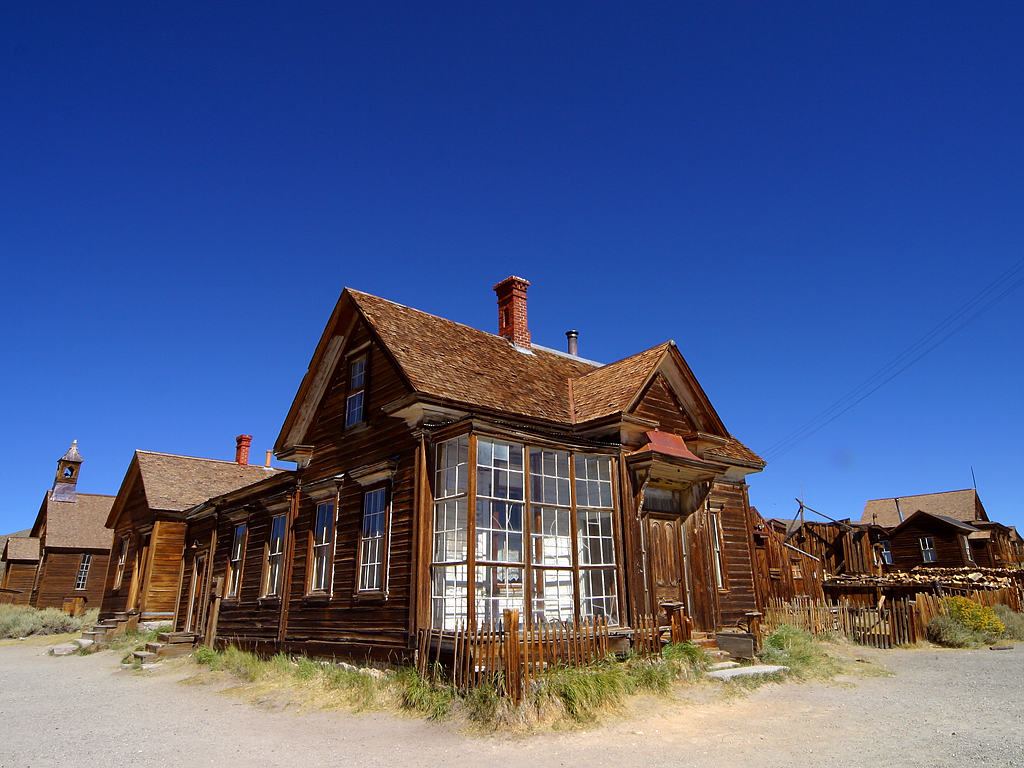
California has hundreds of abandoned mining camps, and most of them are a few foundations on private land or a scatter of rusted cans on a hillside. That's not what this list is. These seven places have real buildings still standing, and you can legally walk around every one of them. Three are state parks, one is a county park with a restaurant and a train ride, and one is little more than a few ruins, a cemetery and a general store that opens when someone's around.
They're listed roughly north to south, so you can pick a region and build a trip around it.
1. Shasta State Historic Park, near Redding
Most people blow right through Shasta. Highway 299 runs straight down what used to be the main street, six miles west of downtown Redding, and the row of roofless brick buildings along the road looks like it might just be old storefronts waiting on a developer.
It's actually what's left of Shasta City, which called itself the "Queen City" of California's northern gold country in the 1850s. Iron shutters still hang on some of the doorways. The one building that's been fully restored is the county courthouse, set back to how it looked in 1861, and it's now a museum with gold rush exhibits and a surprisingly strong collection of California art.
Good to know: The Courthouse Museum is open Thursday through Sunday, 10 a.m. to 4 p.m. The ruins are visible from the street any time. 15312 Highway 299 West.
2. North Bloomfield and Malakoff Diggins State Historic Park, near Nevada City
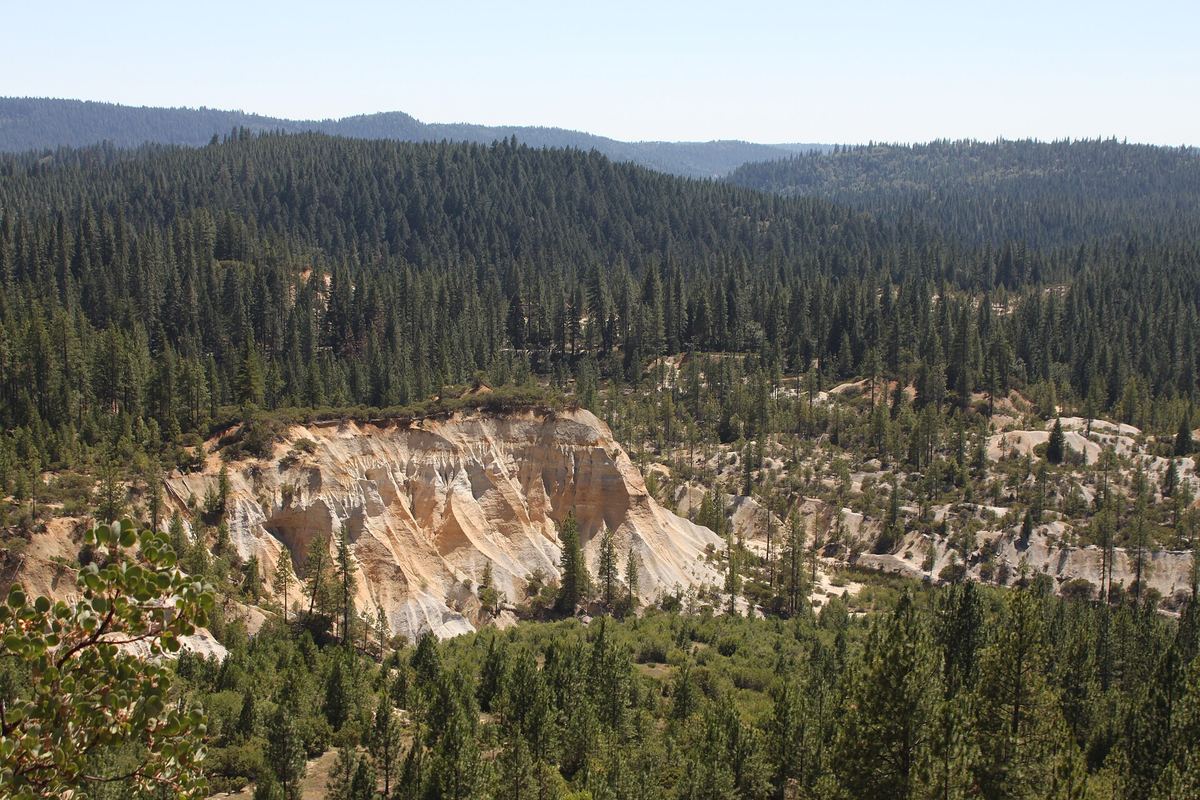
This one is two oddities in one. North Bloomfield is a small, tidy gold rush town with a museum and a street of old wooden buildings. A short walk away is the reason the town existed: Malakoff Diggins, once California's largest hydraulic gold mine.
Hydraulic mining meant blasting hillsides apart with high-pressure water cannons and running the mud through sluices to catch the gold. What it left behind is a huge pit with pink, white and orange cliffs that look more like Utah than the Sierra foothills. The downstream flooding and silt got so bad that farmers sued, and the result in 1884 is what the park calls the country's first environmental protection law. The Diggins Loop trail gets you close to the cliffs, where you can see layers of riverbed gravel that are around 50 million years old.
Good to know: $10 per vehicle, paid at the museum or at the self-pay station. The grounds are open sunrise to sunset. The museum is open daily 10 a.m. to 4 p.m. from Labor Day through October 31, then weekends only from November through May. Town tours run on Saturdays year-round. The park is 26 miles from Nevada City, about 50 minutes. Don't trust your GPS here. Take Highway 49 north to Tyler Foote Road and stay on the pavement, as the park recommends, or you may end up on miles of dirt.
3. Bodie State Historic Park, near Bridgeport
If you only see one California ghost town, make it Bodie. At its peak around 1880 it had something like 8,000 people and 2,000 buildings. Fires in 1892 and 1932 took all but a tenth of them, and what's left has been kept in "arrested decay" since it became a state park in 1962. That means nobody restores anything; they just keep it from falling down.
The result is eerie in the best way. You look through windows into rooms where the furniture, dishes and canned goods are still sitting where people left them. The church, the schoolhouse and the Standard stamp mill are all still there, spread across a bare, windy basin at 8,375 feet.
Good to know: Bodie is 13 miles east of US-395 on State Route 270, seven miles south of Bridgeport. The last three miles are unpaved and can be rough. Hours are 9 a.m. to 6 p.m. from May 1 to November 1 and 9 a.m. to 4 p.m. the rest of the year, but in winter the road usually isn't passable and people come in on skis or snowmobiles. Entry is $8 for adults and $5 for kids 4 to 17. There's no food or gas. Stamp mill tours are $6 and sold only in person at the museum, and they may be canceled in the fall when staff is short. No drones, and don't pick anything up. Even a rusty nail is protected.
4. Cerro Gordo, above Owens Lake
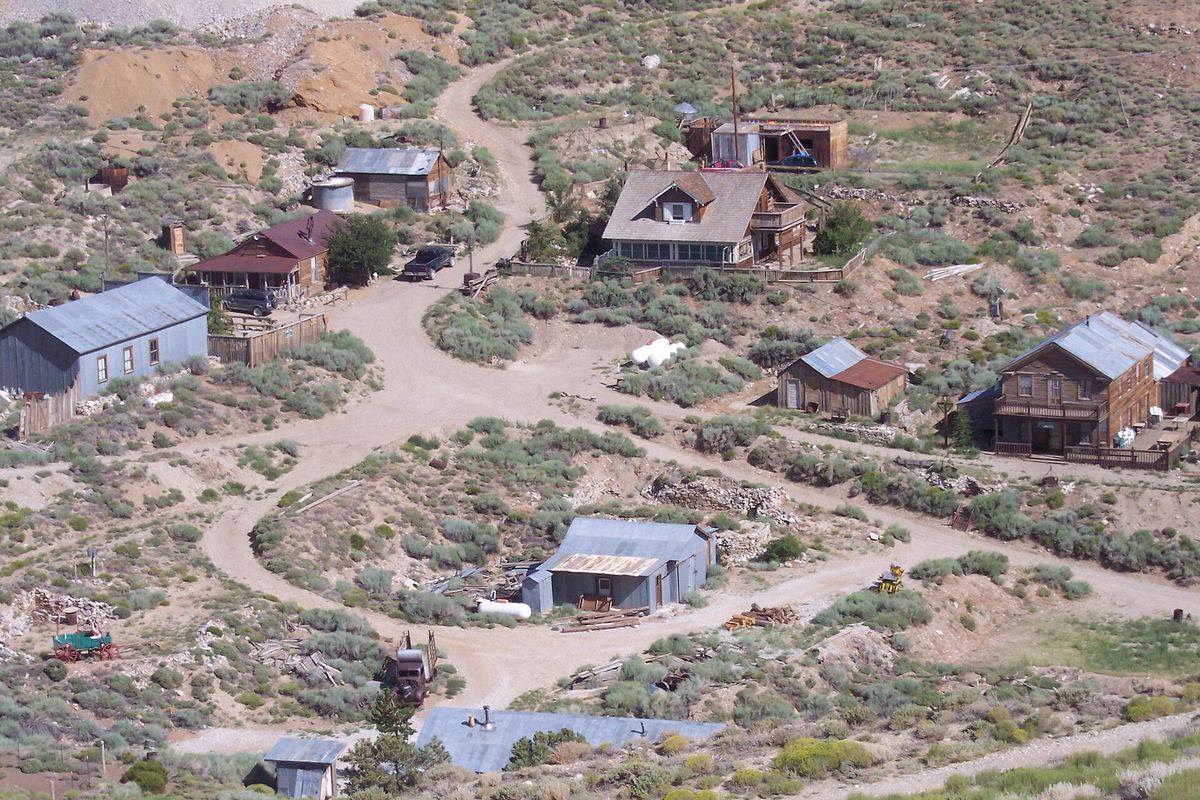
Cerro Gordo was a silver camp high in the Inyo Mountains, above the dry bed of Owens Lake, and it boomed in the late 1860s and 1870s. It's privately owned now, and the owners have been restoring it and sharing the work online, which is why it's become one of the better-known ghost towns in the state.
What you get is a cluster of old wooden buildings, mine structures and a view straight across the Owens Valley to the Sierra that's worth the drive by itself.
Good to know: Cerro Gordo says it's open every day from 9 a.m. to 5 p.m. and free to look around, with no appointment needed. The road up is eight miles of steep dirt from near Keeler, and the town recommends a four-wheel-drive vehicle. We'd add high clearance and a full tank.
5. Ballarat, Panamint Valley
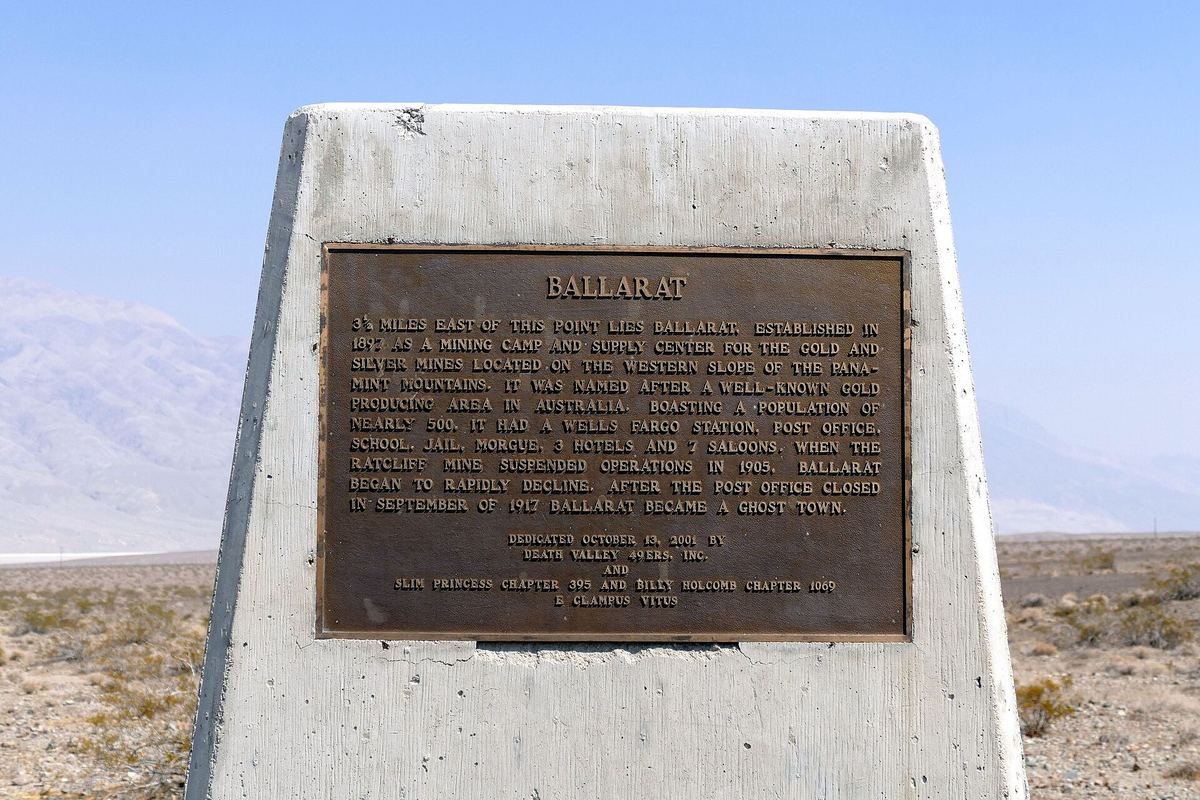
Ballarat is the real deal: a supply town that sprang up in 1897 for the mines in the Panamint Range and was mostly empty by 1917, when the post office closed. At its height it had around 400 to 500 people, seven saloons, three hotels, a jail and a morgue, and not a single church.
What's left is a few adobe ruins, some old vehicles, a small cemetery and a general store that opens irregularly. The most famous grave belongs to Charles Ferge, better known as Seldom Seen Slim, who lived here for about 50 years and died in 1968. His marker quotes him: "Me lonely? Hell no! I'm half coyote and half wild burro." Easy Rider filmed a scene here, and the Manson family spent time at a ranch south of town.
Good to know: Ballarat is 3.6 miles off Trona-Wildrose Road (Highway 178), north of Trona, on a graded dirt road. There's a historical marker at the turnoff. Don't count on the store being open. Bring your own water, food and fuel. Summer highs can hit the 120s, so this is a fall-through-spring trip.
6. Randsburg
Randsburg calls itself a "living ghost town," and that's fair. Gold was found here in April 1895, the Yellow Aster Mine took off, and by 1899 roughly 3,500 people lived in town. The 2020 census counted 45.
It sits about a mile off US-395 in the Rand Mountains, and Butte Avenue is lined with weathered storefronts, an opera house, a little jail and a couple of churches. People still live in many of the buildings, so treat it like a neighborhood, not a museum. Stay on the street and don't wander into yards or old mine openings.
Good to know: Walking around is free. The Rand Desert Museum at 161 Butte Avenue is open weekends from 11 a.m. to 2 p.m. and by appointment, run by volunteers. The old General Store with its soda fountain has been closed since 2022, and business hours in town are unpredictable, especially on weekdays. A flood hit Randsburg in September 2025, so check Kern County road status after storms. Weekends in fall and spring are your best bet.
7. Calico Ghost Town Regional Park, near Barstow
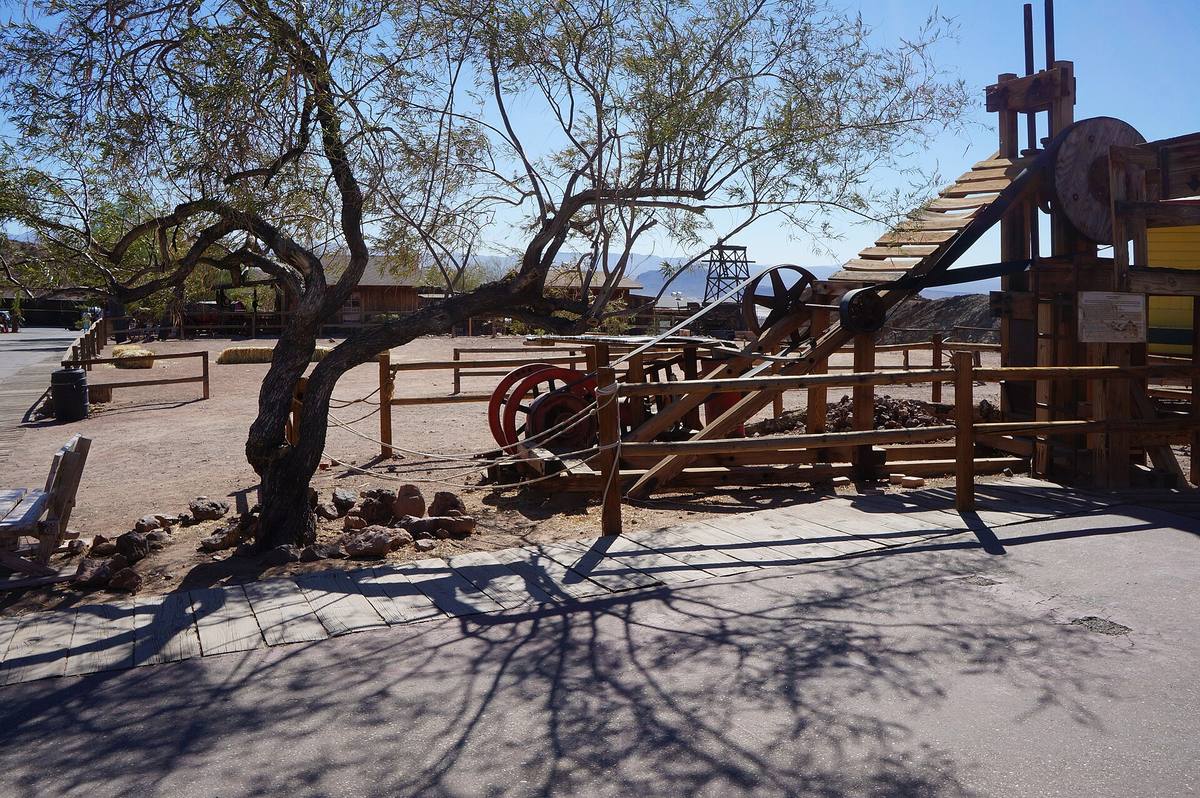
Calico is the easiest ghost town on this list and the least ghostly, and that's fine. It was a silver town founded in 1881 and abandoned by the mid-1890s after the silver price collapsed. Walter Knott, of Knott's Berry Farm, bought it in the 1950s and rebuilt most of it to look like it did in the 1880s. Five original buildings remain. San Bernardino County runs it today.
Expect shops, a restaurant, a saloon selling sarsaparilla and paid add-ons like the Maggie Mine, the Calico and Odessa Railroad and the Mystery Shack, a house of optical illusions. It's a good stop with kids, or with anyone who wants their ghost town to come with lunch.
Good to know: Open daily 9 a.m. to 5 p.m., closed Christmas. Admission is $8 for adults, $5 for ages 4 to 11, free for 3 and under, and $1 per dog. Special event weekends cost more. The attractions are priced separately. It's right off I-15 at 36600 Ghost Town Road, Yermo.
Before you go
- Check the road, then check it again. Bodie, Cerro Gordo and Ballarat all involve dirt. Weather can close or wreck these roads, and tow trucks are far away and expensive. A portable tire inflator is cheap insurance if you air down on washboard roads.
- Carry more water than you think you need, especially in the desert towns, and don't plan on buying food or gas at any of them except Calico.
- Cell service is spotty or gone at Bodie, Cerro Gordo and Ballarat. Download offline maps or bring a Benchmark California Road & Recreation Atlas.
- Take pictures, not souvenirs. At the state parks it's illegal to remove anything, and at the private and inhabited towns it's someone else's property.
- Stay out of mines and off unstable structures. Old shafts can be hidden, and the air inside them can kill you.
- Seasons matter. Bodie is best from late spring to fall. The desert towns (Ballarat, Randsburg, Calico, Cerro Gordo) are best from October through April.
Looking for more strange places in the state? Head to our California hub, or see our California unique places guide.
More California: California state guide · The most unique places in California · California scenic road trip · California Route 66 oddities road trip · Pacific Coast Highway oddities · Yosemite firefall guide · California places with a haunted reputation