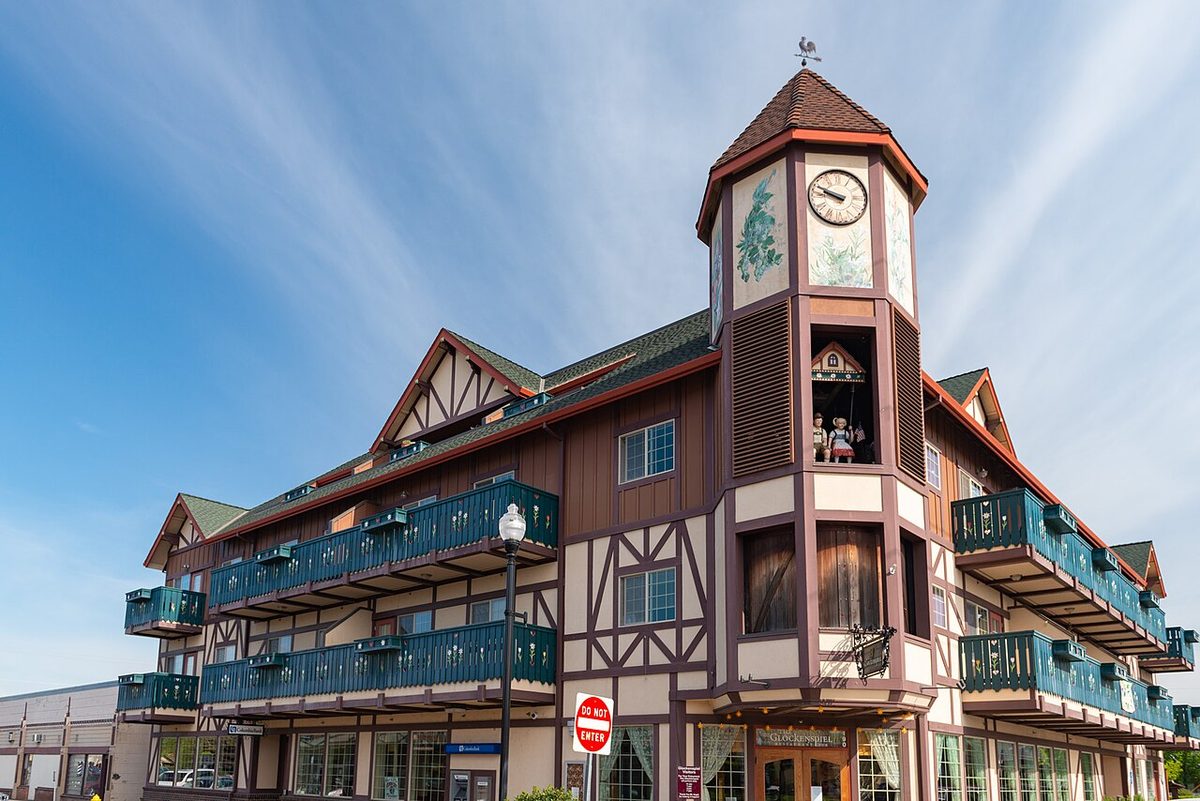
Oregon's small towns like to pick one idea and commit to it. A Willamette Valley farm town built a 49-foot glockenspiel. Another still answers to the name of a fictional town from a 1986 movie. A mountain town in the far northeast filled its sidewalks with bronze, and a high-desert stop that once shipped wool by the million pounds now counts its residents in the twenties.
All seven towns here are open to the public and small enough to see on foot. We checked each against its city, county, museum or tourism site in October 2026.
Mount Angel: a Bavarian clock tower in farm country
The Swiss and German roots are real. Benedictine monks from Engelberg, Switzerland, founded Mount Angel Abbey on the butte above town in 1882, and the name is an English take on Engelberg. The Bavarian look came with Oktoberfest, first held in 1966 and still filling the streets every September.
The centerpiece is the Glockenspiel at 190 E. Charles Street. It went up in 2006 after a five-year fundraising drive, and at 49 feet the Oregon Encyclopedia calls it the tallest glockenspiel in the country. Carved figures roll out at 11 a.m., 1 p.m., 4 p.m. and 7 p.m. daily, starting with a Kalapuya man praying on the butte and finishing with Papa Oom Pah, the tuba-playing Oktoberfest mascot. Grab a spot across the street a few minutes early.
Then drive up the hill. Alvar Aalto designed the abbey library, and Duke Ellington played at its 1970 dedication. It's open to the public, 9 a.m. to 4:30 p.m. on fall weekdays. The abbey museum is closed for a chapel renovation until October 2027, so plan on the library, the church and the Benedictine Brewery taproom.
Glockenspiel and festival: oktoberfest.org · Abbey hours: mountangelabbey.org
Brownsville: Castle Rock, Oregon
In the summer of 1985, Rob Reiner's crew turned Brownsville into Castle Rock for Stand By Me. Downtown, the Brownsville Saloon, the Baptist cemetery and Pioneer Park, where about a hundred locals played extras in the pie-eating contest, all made the film. Fans still come every July for Stand By Me Day, which marked the film's 40th anniversary this year.
Start at the Linn County Historical Museum at 101 Park Avenue, set in the old railroad depot and six Southern Pacific railcars. It has a permanent exhibit on the filming, plus a 29-seat boxcar theater with seats salvaged from the town's old movie house. The county lists hours as Wednesday through Saturday, 11 a.m. to 4 p.m., and admission is free.
The stranger stop is at the west edge of town. The Living Rock Studios is a two-story building of about 800 tons of stacked rock, created by Howard B. Taylor after strokes and a heart attack in 1964 ended his working life. Inside are 75 of his woodcarvings and 125 bird paintings. It was dedicated on October 13, 1985, his and Faye Taylor's 50th anniversary. Call (541) 466-5814 first and bring a jacket; all that rock keeps the place cold.
Visitor information: historicbrownsville.com · Museum: Linn County Historical Museum
Cottage Grove: covered bridges and a movie railroad
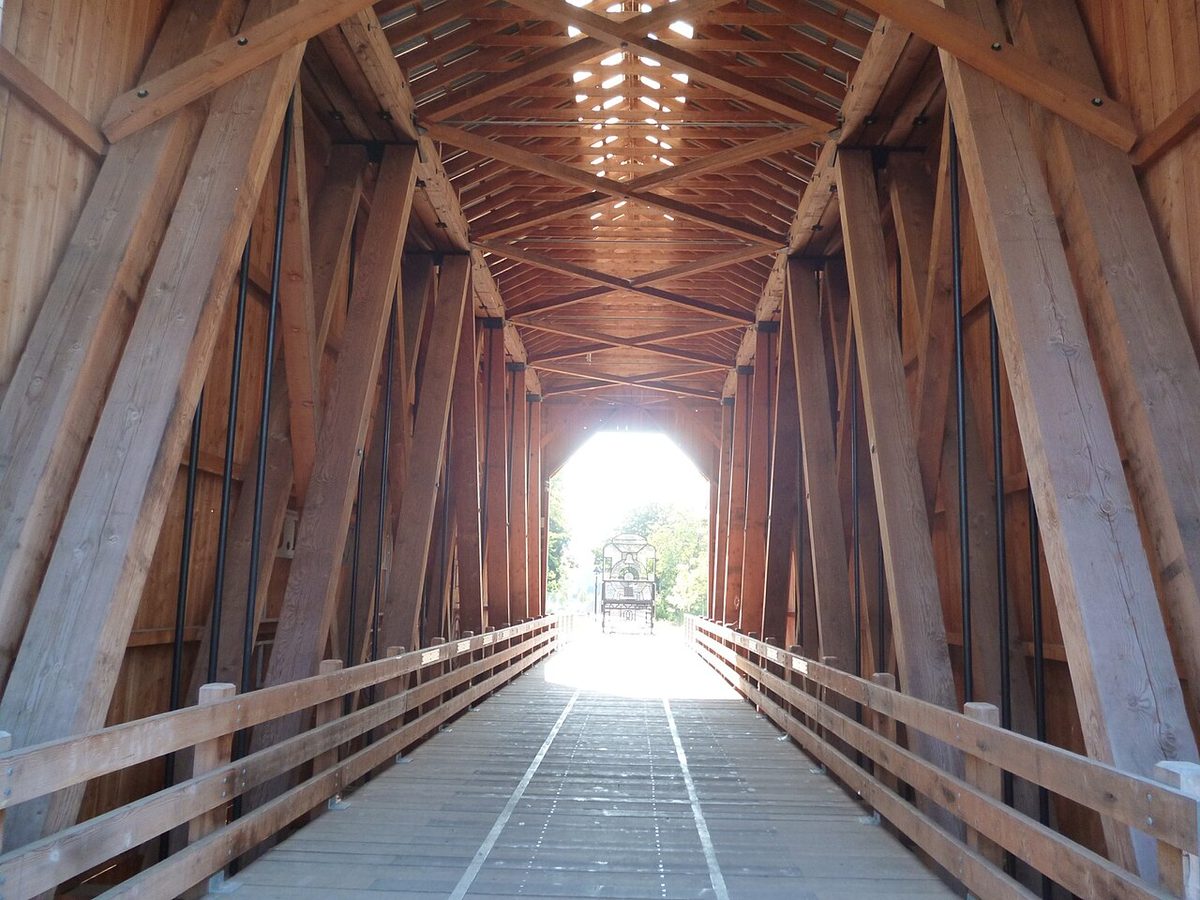
Cottage Grove calls itself the Covered Bridge Capital of Oregon, with six covered bridges in and around town. The city's 20-mile Covered Bridge Tour Route links them in one to two hours by car.
Chambers Railroad Bridge is the one to see. Built in 1925 to carry log trains across the Coast Fork of the Willamette to a sawmill, it's the last covered railroad bridge in Oregon, and the city believes it's the only one left west of the Mississippi. When it began listing badly after a 2010 storm, crews took it apart and rebuilt it piece by piece. Since November 2011 it has carried walkers and cyclists at South River Road and Harrison Street. Mosby Creek Bridge, from 1920, is Lane County's oldest, and you can still drive its single lane.
East of town, the paved 14-mile Row River Trail follows the old Oregon, Pacific & Eastern Railroad along Dorena Reservoir. Buster Keaton shot The General on that line in 1926, and most of the track-walking scenes in Stand By Me were filmed there too.
Bridge guide: cottagegroveor.gov · Trail: BLM Row River Trail
Jacksonville: a gold-rush town that stayed put
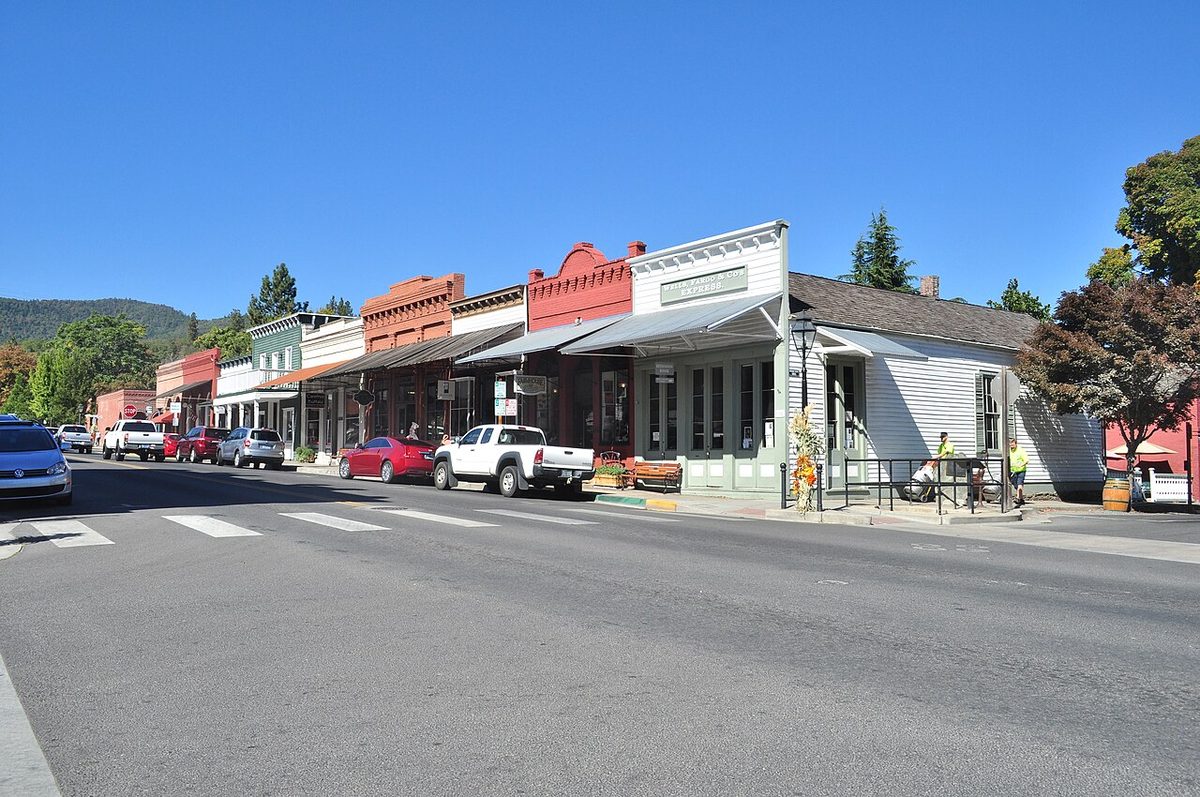
Gold turned up in Rich Gulch, on Daisy Creek, in the winter of 1851–52, and the rush built Jacksonville almost overnight. A "Gold First Found Here" marker on Applegate Street credits two mule packers, James Cluggage and John Poole. Historic Jacksonville, Inc. is refreshingly candid that others had already found gold in nearby Jackson Creek, and that Cluggage probably made his real fortune selling town lots.
The unusual part is how much of that era still stands. Jacksonville became a National Historic Landmark district in 1966, and the Advisory Council on Historic Preservation counts more than 275 historic resources here. On California Street, the Beekman Bank (around 1863) is one of the few wooden commercial buildings that outlasted the town's fires. Cornelius Beekman opened Southern Oregon's first bank in 1857, and when he died in 1915 the doors closed with everything left as he'd run it.
Grab a walking map at the visitor center at North Oregon and C streets, then head to the Jacksonville Cemetery, open daily from 8 a.m. to a half hour after dusk. Historic Jacksonville also leads $10 Haunted History walks on select October nights, by reservation.
History and tours: historicjacksonville.org · Visitor planning: jacksonvilleoregon.org
Sisters: the 1880s, by city code
Sisters takes its name from the Three Sisters peaks; postal officials trimmed "Three Sisters" to one word in 1888. It grew as a supply stop for sheepmen and then a lumber town. The last mill closed in 1963, and the population started to slide.
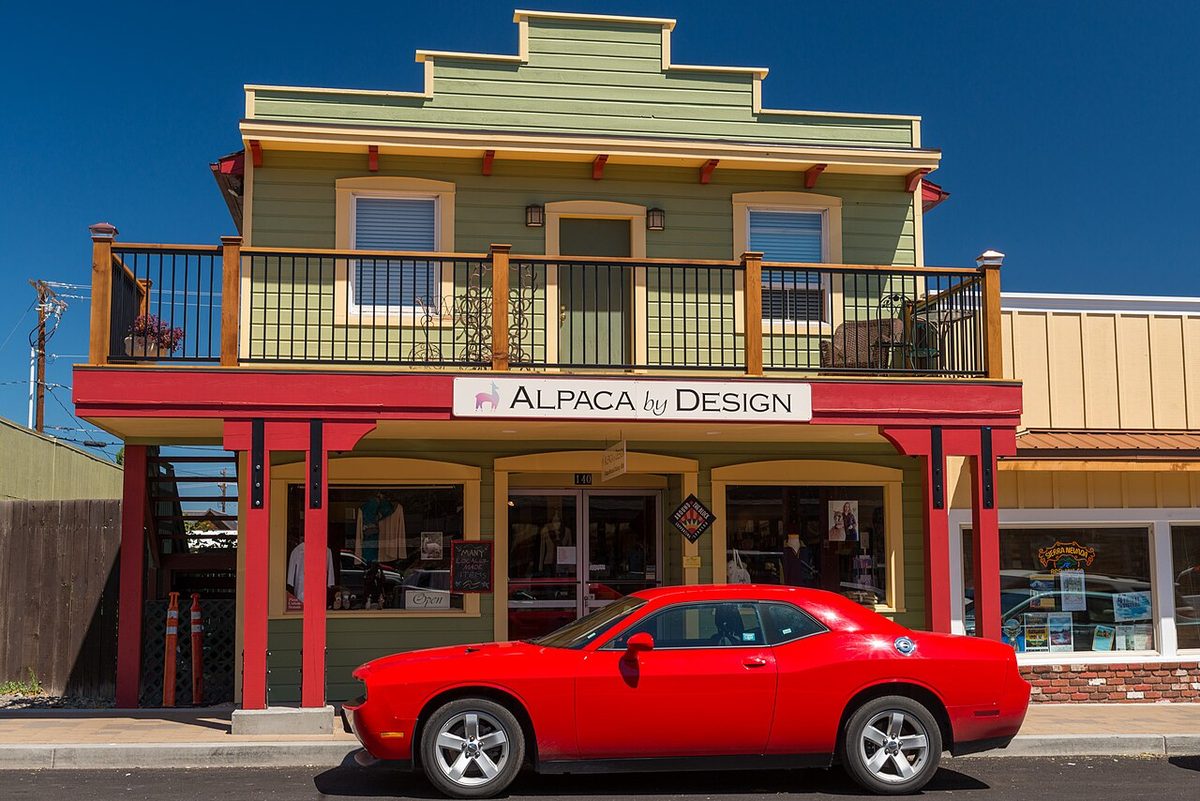
The town's answer was a costume. In the early 1970s, with financial help from Brooks Resources, the city council wrote an 1880s-style storefront into its zoning ordinance. The code still has a section titled "Western Frontier Architectural Design Theme," which is why galleries, banks and coffee shops wear false fronts and wood siding. It works. Sisters feels like a frontier town with very good espresso.
If you like a crowd, come the second Saturday in July. The Sisters Outdoor Quilt Show began in 1975 with a dozen quilts hung outside Jean Wells Keenan's shop. Now it hangs more than 1,300 quilts around town, draws about 10,500 visitors and bills itself as the world's largest outdoor quilt show. It's free.
City history: ci.sisters.or.us · Quilt show: soqs.org
Shaniko: the wool capital that emptied out
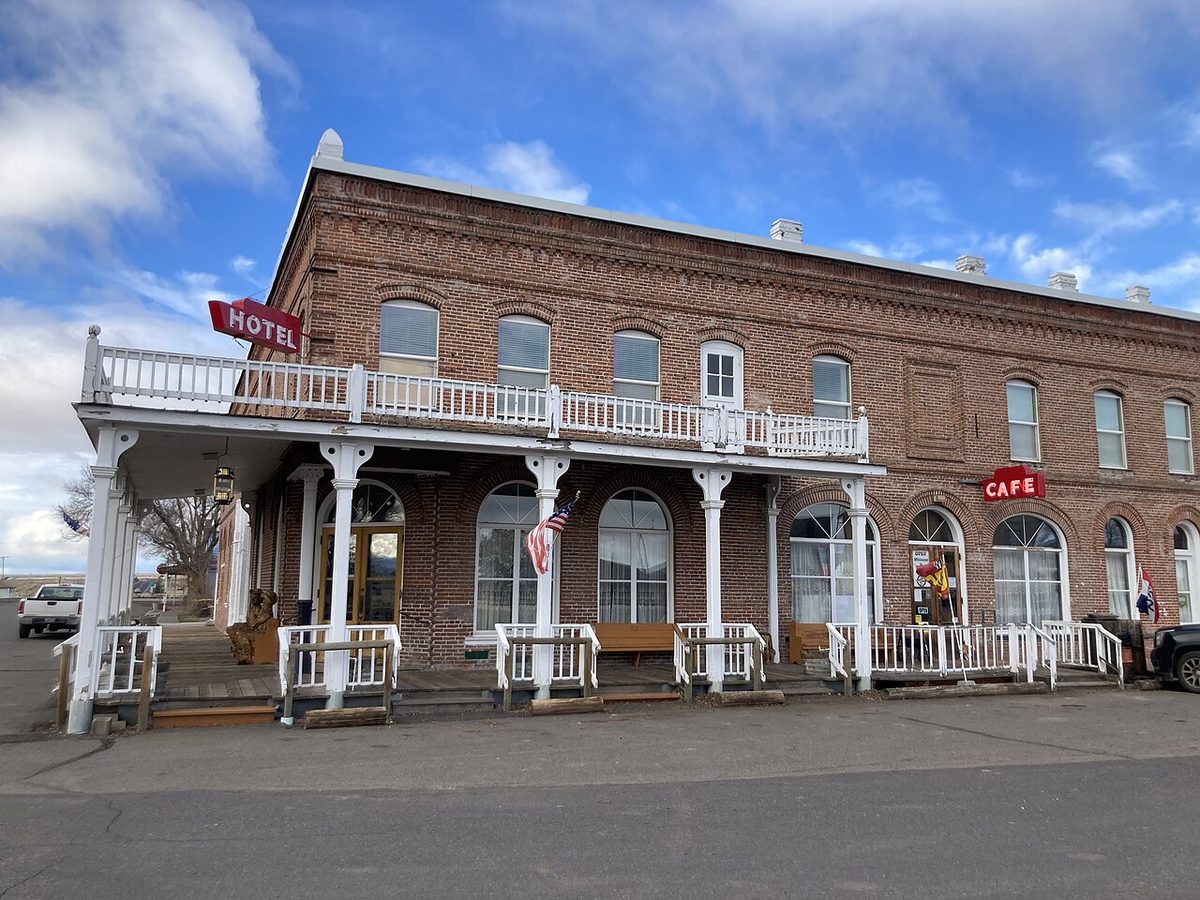
Shaniko, on U.S. 97 about 40 miles north of Madras, boomed fast and faded faster. The Columbia Southern Railway arrived in 1900, and warehouses here could hold 4 million pounds of wool. By 1903 the town was the "Wool Shipping Capital of the World," and the Oregon Encyclopedia puts 1904 wool sales at more than $5 million. Then James J. Hill's Oregon Trunk Railway opened a rival line up the Deschutes, fires in 1910 and 1911 burned much of downtown, and people left. In 1959 the state named it Oregon's Ghost Town of the Year. About 23 people lived there in 2023.
It's a ghost town with the lights on, and that's the fun of it. The Shaniko Hotel, a fixture since 1902, reopened in August 2023 with 18 rooms. The historic district also takes in the old school, city hall and jail, a wedding chapel and the wool warehouse. Walk the streets, stop at the café or general store, and admire the old buildings from outside unless they're signed open.
Hotel and town notes: shanikohotel.com
Joseph: bronze on every corner
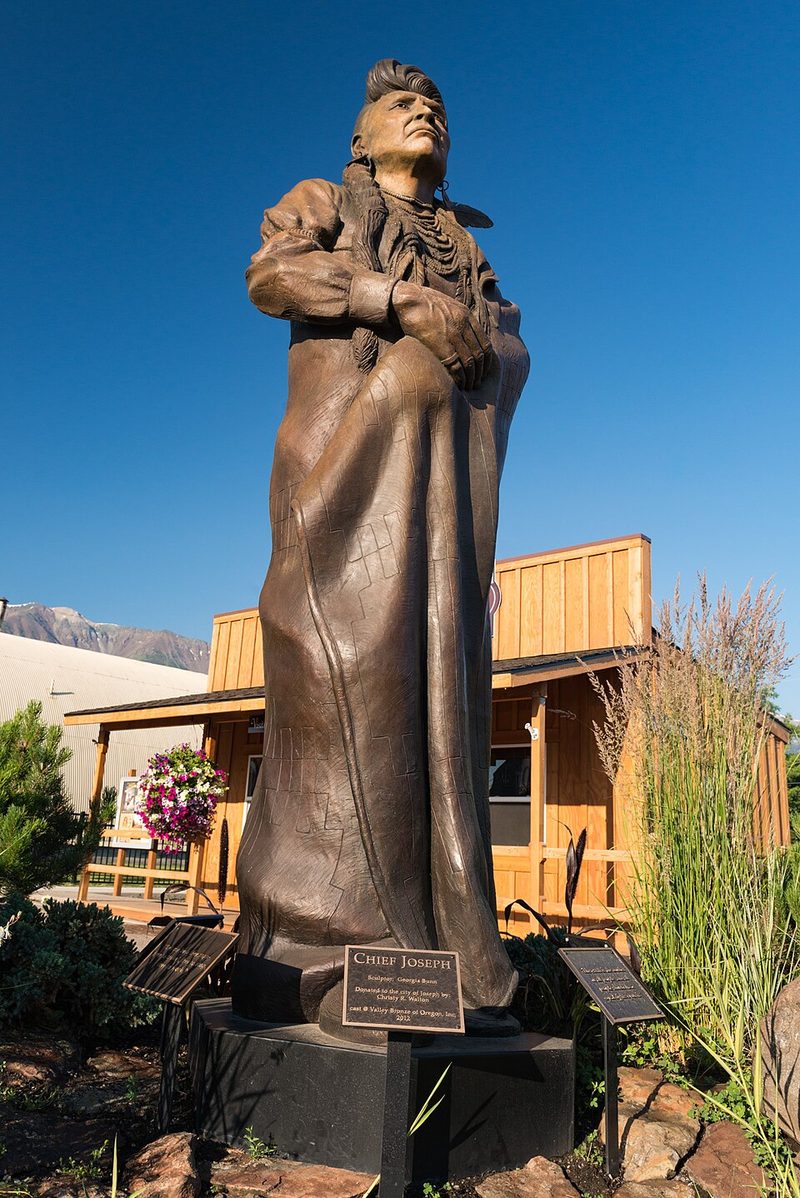
Joseph sits at the foot of the Wallowa Mountains and is named for Chief Joseph of the Wallowa band of the Nez Perce, whose people were forced from this valley in the 1870s. Its oddity is newer. In 1982, as the timber economy faded, Valley Bronze opened a foundry here, and more foundries and galleries followed. Its work runs from small art editions to the bronze wreaths at the National World War II Memorial in Washington, D.C.
The payoff is a Main Street lined with more than a dozen life-size and monument bronzes, laid out as a self-guided Art Walk. Start with Georgia Bunn's 12-foot Chief Joseph at Main Street and Joseph Avenue. Nez Perce tribal members asked that he be shown as a diplomat and negotiator, and the tribe's oldest living member attended the 2012 dedication.
To see how a statue gets made, take a Valley Bronze foundry tour at 307 W. Alder Street: Monday through Thursday at 11 a.m., about 90 minutes, $20 per person, kids 12 and under free.
Art Walk: josephoregonchamber.com · Foundry tours: valleybronze.com
How to string them together
Mount Angel, Brownsville and Cottage Grove sit near I-5 and make an easy two-day run south from Portland, with Jacksonville a couple of hours farther down, just outside Medford. Sisters pairs with a Bend weekend, Shaniko is a detour on U.S. 97, and Joseph deserves its own trip with at least two nights in the Wallowas.
A current Oregon road atlas is worth having on the eastern legs, where towns are far apart, and a packable rain jacket earns its spot in the Willamette Valley most of the year.
Before you go
- Call the small museums first. Hours at the Linn County museum, Living Rock Studios and the abbey library shift by season.
- Plan Mount Angel around the clock. The Glockenspiel plays at 11, 1, 4 and 7. The abbey museum reopens in October 2027.
- Plan Joseph for early in the week. Valley Bronze tours run Monday through Thursday; groups should call ahead.
- Enjoy private places from the sidewalk. Many Shaniko buildings and Brownsville's film-location homes are private property.
- Fill the tank before the high desert. Distances between Sisters, Shaniko and Joseph run long.
These towns reward slowing down. Wait for the Glockenspiel to play. Walk through a railroad bridge built for log trains. Take the foundry tour. Pick the two or three that fit your route and give each an unhurried afternoon.
Looking for more unusual Oregon trips? Start at our Oregon hub, or see unique places in Oregon, our Oregon Coast oddities road trip, and our Oregon scenic road trip.
More Oregon: Oregon state guide · The most unique places in Oregon · Oregon scenic road trip · Oregon Coast oddities road trip · Oregon places with a haunted reputation · Washington's themed and oddball towns